Showing posts with label confidence building. Show all posts

Thursday, 27 September 2018

How playing Pokémon Go helps my mental health

by Mark Evans aka wildfairyboi 

As a sufferer of anxiety and depression, and suspected Post Traumatic Stress Disorder (PTSD), I spend a lot of time alone in my room. I find it extremely hard to start a conversation and when people begin to talk to me I get dizzy. My heart begins to race and I find it hard to catch a breath so I kinda shut off to the world. To some I might seem extremely ignorant. But this is not the case. I would love to be able to just walk up to someone random, introduce myself, and have a good old chat...


However, since I can remember I have always freaked out at the prospect of meeting someone new .. Some days I even find it hard to talk to people I know very well including my own family so I'm always looking for reasons to give me confidence to leave my room... 

As a 90s baby I grew up watching Pokémon and I loved it throughout my childhood…. And, not gonna lie, I still watch it to date… So when Niantic released Pokémon Go I was really excited to give it a go to the point I ordered a new contract mobile specifically to play... I was so taken in to the game catching all my favourite Pokémon I started going out all night when there was nobody around to play the game. I started to go out nearly every night. I walked around town and the lake every day for nearly a year.

Then I got ill and also had to look after one of my mates so I stopped playing so much. I actually didn't pick up the game for nearly 9 months as I was with my friend every day trying to fix her life up. Or I was really sick myself, and in and out of hospital. So I stopped my evening walks and began to spend all my time either at hers or hiding in my room again as I slowly got more sick. This made my depression and anxiety worse to the point I stopped going out again at all.

In the last 4 months I have picked up my fone and begun to get out walking again as I convinced my mate to do the same. She also got a fone to come and play Pokémon with me. So we began walking round in the evening, then we decided to start doing some of the daytime tasks on the game including meeting other players. I noticed my anxiety was still there but having Pokémon to talk about distracted me enough to get into conversations about it.


We met more people to share Pok
émon info and tips with and began to get invites to X raids for a chance to catch legendary Pokémon ... So I started to go and meet random groups to play Pokémon although still feeling anxious .. Playing Pokémon Go gave me a reason to meet up with these random people and a reason to talk, so I slowly gained confidence to the point I'm now out most of my day playing... I’m either walking round town or the lake several times hatching eggs or walking Pokémon or even just chasing cool Pokémon on the near by. 

I'm even trying to get groups of people to come and meet me to help at some of the Pokémon raids and awaiting any one asking for help on the chat. If anyone asks for help I'll try to get wherever the raid is. 


So I've gone from having no confidence and staying indoors all the time to walking round the town for hours on end not wanting to go home some days. I’m meeting lots of new people and re-meeting old ones - all out playing Pokémon. I noticed there's quite a few really anxious players but all eager to come play when they can. 

S is another regular Pokémon Go player locally who has been 
struggling with her mental health. She says: 
“Playing Pokémon Go has literally changed my life.”

Big thanks to Anne Woods who is a Participation Officer in our team but also a very keen player of Pokémon Go. Anne has been playing since the day it started in the UK. She very kindly created the infographics with the Pokémon Go basics for the newbies amongst us...

Monday, 20 March 2017

Therapeutic gardening in Machynlleth


At the start of a new gardening year we talk to Kate Doubleday, Garden Volunteer Co-ordinator at Gerddi Bro Dyfi Gardens in North Powys. Kate tells us more about this therapeutic open space for people which is also beneficial to local wildlife.

What is the aim of the project?

Gerddi Bro Ddyfi is an organic wildlife community garden in the heart of Machynlleth. It is a people-led project, where the volunteers can choose their own activity. The aim is to create a nurturing, peaceful environment where everyone can feel supported and gain a sense of belonging. Our volunteer days are on Tuesdays and Thursdays between 10.30am - 4pm. We provide refreshments and have a volunteer shelter where people can take refuge in the rain. Throughout the year we also offer a range of one day activity workshops in scything, willow weaving, bird watching, and green woodworking for example.

Tell us more about your role at Gerddi Bro Ddyfi Gardens?

My role is mainly to facilitate a group of volunteers to enjoy and explore the garden. I work with a dedicated volunteer committee, and none of it would happen without their efforts.

My role is multi-faceted, and I go from gardening with the volunteers to liaising with Community Psychiatric Nurses to sitting in fundraising meetings.

I also work with the community nursery group doing wild play and environmental education with Early Years, and I’ve worked with youth clubs, doing outdoor work and graffiti projects with young people. The youth club was instrumental in the design aspect of the garden in the early days.

How long have you worked there and what drew you to the role?

I’ve worked at the gardens since 2008. Myself and a colleague, Leigh Munton, had both previously worked in therapeutic gardening roles and saw a need for this in Machynlleth. We ran short horticultural courses in the community and realised that when people had finished these one-off courses there was no way for people to carry on gardening in a social way.

Having worked at the Martineau Gardens in Birmingham previously I’d seen the value of a permanent therapeutic garden and how much this can provide a community. I’d experienced the incredible power gardening has on our wellbeing.


Tell us about the volunteers at the gardens

They’re fantastic! The garden wouldn’t be what it is without our volunteers, both on the ground and on the committee. We have a dedicated core group, who are all ages and from a variety of backgrounds, who turn up whatever the weather and maintain the garden for the community. Some of them have been coming for years.

What kind of work do they get involved with?

We do a range of activities, from weeding to woodwork, to planting flowers to attract wildlife to maintaining the vegetable beds.

How does a typical day pan out?


The day always starts with a cup of tea and a catch-up, and often some cake too! There’s usually a list of things that need doing, and this depends very much on the season, but people lead their own activities, and they can do as little or as much as they want. You can work alone or in a team – people have their own preferences.

Things always get exciting when we’re preparing for an event. It’s good to have something to work towards.

Who can volunteer to join the project?


Gerddi Bro Ddyfi is open to anyone from the community. We have good wheelchair access and hope to be as inclusive as possible. We’re particularly open to people who may feel excluded or who are having challenging life experiences.

What kind of support do you offer to the volunteers?

I see myself as a facilitator to help people come together in a beautiful space to socialise and connect with one another, and with nature. I aim to always provide a listening ear too. In some cases I signpost people to receive further support.


How does volunteering in a garden environment impact on people’s mental health?

Research shows that the act of looking after plants, as well as being active outdoors, is beneficial for a person’s mental health.

Horticulture as a therapy differs from other therapies in that it works with living entities which have their own needs and requirements. Through nurturing these entities, people become involved in something outside of themselves and this process can help them feel less isolated and more connected with the social and natural world, as well as developing a sense of pride and accomplishment.

Volunteers also interact with visitors from the community and this is clearly beneficial for their confidence, especially if they feel stigmatised.

Tell us how your work fits in with other voluntary sector groups


We work closely with the volunteer bureau, Community Action Machynlleth & District (CAMAD), also based in Machynlleth, which often sends volunteers our way. We’ve recently been building bridges with Ponthafren Association in Newtown, and we’ve done joint events with Edible Mach, Bro Ddyfi Advice Centre, and Mid Wales Housing, under the banner Bwyd Dyfi Partnership.

What are the main challenges of your role?

Fundraising, without a doubt, is the biggest challenge. It’s very difficult to raise funds alongside the work I do on the ground, and obviously with austerity policies things are getting harder. Working with volunteers is extremely rewarding, although sometimes it’s challenging, and I’m learning all the time.

Tell us about some of the most rewarding work you have done at the Gardens


I’ve found it very rewarding to be involved in providing access for people with physical disabilities, enabling them to garden and to take pleasure from outdoor work. The greatest reward is to see the volunteers connecting and growing to support one another, so that my role becomes marginal. Some of them become very close friends. Also it makes me happy to see volunteers go on to find jobs afterwards, with greater confidence, having used the gardens as a stepping stone. Having been a volunteer myself in Birmingham during a difficult time in my life, it gives me pleasure to be able to give something back.


If you would like to get involved at Gerddi Bro Ddyfi Gardens contact Kate on 07941 908 891 or check out the website.

Monday, 6 March 2017

Horsing Around Project

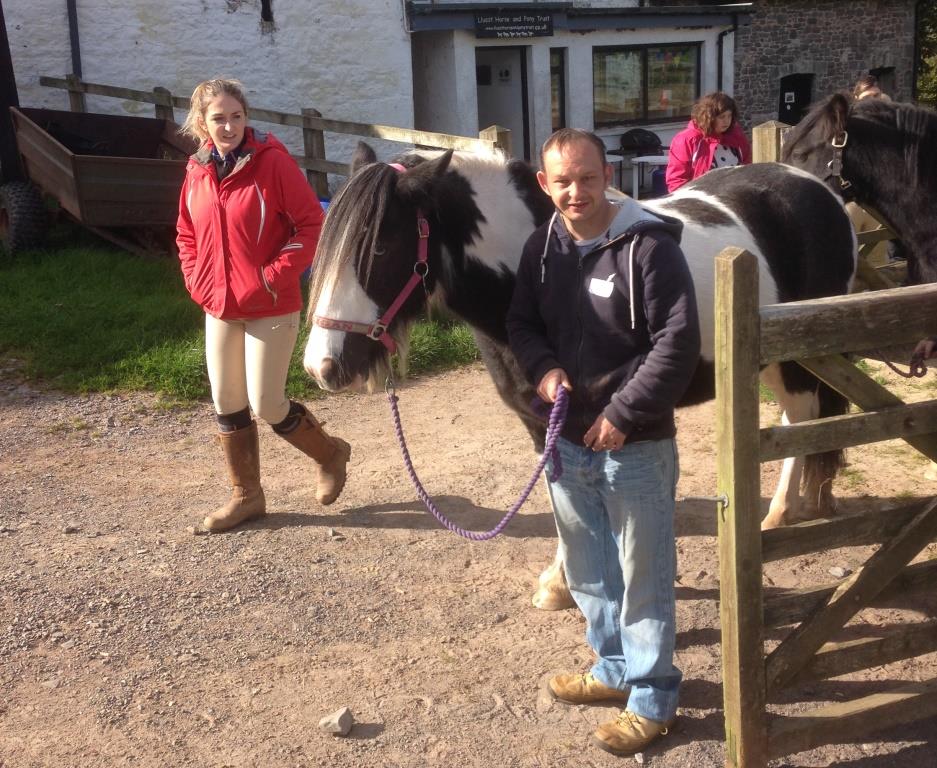
A Horsing Around Project volunteer with a Lluest pony
Previous posts on this blog have featured some of the innovative projects run by West Wales Action for Mental Health, including Tonic – surfing for mental health and Spirituality and Recovery in mental health.

This week our guest author is Marie Rocke, a Mental Health Development Worker at WWAMH. Recently Marie has been working very closely with an animal charity in the Brecon Beacons in Carmarthenshire called Lluest (“Haven” in Welsh). Lluest set up the Horsing Around Project with funding from the Big Lottery Fund and support from WWAMH. Marie tells us more about the project.


It is a well-known fact that Animal Assisted Therapy can support many people to gain confidence, become more self aware and to generally get more out of life. This kind of therapy, especially Equine Therapy, has proven its success repeatedly in supporting individuals on the road to Recovery.

Lluest Horse and Pony Trust, in collaboration with WWAMH, is offering 'Lluest’s Horsing Around Project' to provide Equine based learning for individuals living with mental health problems in Carmarthenshire. The courses are free for participants, and travel costs are covered by the project which is fully funded by the Big Lottery Fund. This is a pilot project incorporating training of staff from both organisations to allow them to collaboratively run future courses over the next few years to create a legacy.

The courses consist of horse care, so participants learn about grooming and mucking out and progress onto horse-watching to learn about body language and horse communication. There is then the opportunity to play games with the ponies, to improve the confidence of the attendee. Games include navigating around an obstacle course within the manège (the enclosed area where horses are trained) and end with games at liberty with the ponies. There is no riding at any point. The courses have been running very successfully for the past 12 months. The last day will run in March and is fully booked. Participants were accompanied by their Occupational Therapists or Community Psychiatrist Nurses in some cases.

Lluest is experienced in providing sessions on Horse and Pony Care and has been doing so for around three years. The staff are trained and well versed and many a young person has learnt what it really entails to keep a horse or pony – before they buy or loan an animal. This is all part of Lluest’s education drive to prevent horses and ponies being abandoned or neglected. We are hopeful that this work will continue at Lluest for the benefit of the attendees and the horses that they support.

What the WWAMH Director and Development Worker say

Lluest staff have had great success in providing training for individuals who wish to know more about Horse and Pony Care. They now wish to extend and offer this course to those individuals living with mental health problems who would normally not find this kind of training accessible for a number of reasons, be that confidence, finances or transport.

Many individuals living with mental health conditions find it hard to attend new and unfamiliar groups unless these are recommended by a trusted advisory service. Also, social isolation, lack of confidence and low self-esteem all inhibit these individuals from gaining valuable experiences, training and positive collaborations which would assist them in reaching their own personal goals.

Lluest wishes to overcome these barriers and believes that by working in collaboration with the West Wales Action for Mental Health, and by having access to the wide variety of groups currently supporting those with mental health problems, that these courses and educational horse and pony experiences, can be widely available to those who may benefit from them the most.

We are proud to be working with Lluest and hope to run many more courses collaboratively in the future.

Angie Darlington - Director of WWAMH

Marie Rocke - Mental Health Development Worker

If you require further information, or live in Carmarthenshire and wish to attend a Horsing Around Day, please contact Lluest on 01550 740661.


And if you live in Powys – do you think a similar project would work well here? Let us know in the comments box below.

Thursday, 8 September 2016

Second Chances, New Horizons

Matt Clark (second from left), retiring Reserve Warden, Montgomeryshire Wildlife Trust

This week's guest post was first published in the latest edition of the Montgomeryshire Wildlife Trust News. Many thanks to the local wildlife charity for allowing us to republish here.

Volunteers are vital to the Trust’s work – we simply couldn’t do it without them! We are also grateful for the opportunity to make a real difference to people’s lives, as this letter from retiring reserve warden Matt Clark shows:

In February 2012 I had just been released from HMP Altcourse after serving 9 months for what I still class as a despicable crime of fraud and forgery. On returning home I was unable to go out without my parents for I lived in fear of retribution. I was diagnosed with manic depression and, as in prison, I was under the care of a mental health team due to attempts to take my own life.

In March 2012 the Montgomeryshire Volunteer Bureau suggested I try a visit to the Nurtured by Nature project at Severn Farm Pond. I went along in the first week of April and lasted all of 6 minutes. It was just too much for me - all those eyes looking at me and judging me, as I thought. But the following week I went again and stayed for the whole session. I started to attend unaccompanied and quickly realised that I wasn’t being judged at all, that one’s past can be left at the door. I was able to go there and share my interest in wildlife, under the leadership and later friendship of Mel. I was able to find my feet and in August of that year I was able to go to Tesco on my own to buy a paper - a huge achievement.


I worked at the pond for 3 years every Wednesday without fail. Whilst there I have learnt more about myself, have a better tolerance of people and have learnt how to build bug hotels, bird boxes, adapt habitats for the benefit of wildlife and learnt about wild flowers. My general knowledge has increased widely and I have built up the courage to join many other wildlife groups and Trusts. Over the time I spent at the project I was able to express myself, to tell my story and not be judged. Through the project I have met a chap from a completely different walk of life who has turned out to be a dear friend, something I would never have done before.

Prison strips you of everything - self-belief, self-respect and freedom. The project gave it all back to me as well as a sense of belonging. I was fortunate to be made warden of Severn Farm Pond which was a huge honour. To be given that chance in life to give something back was truly excellent. As a result of the self-confidence I have gained from the project I now run my own business, have been signed off by the mental health team and am starting a new adventure in my life.


If anyone gets an opportunity to join or work with MWT or at Severn Farm Pond then do it. It will change your life for the better, I guarantee it. As I have said before, Mel* and the project changed my life. The sessions at the reserve mean so much to the people that attend them. I’m sure I’m not the first and I won’t be the last to pass through the Nurtured by Nature project and be so much better for it.


Many thanks for Matt for sharing his story with a wider audience. Have you volunteered in conservation work? How has it impacted on your mental health? Tell us more in the comment box below.

*Mel Chandler is the MWT Community Partnerships Officer. She works with local community, voluntary and statutory agencies to develop outreach projects, such as Nurtured by Nature, which promote and connect people and the natural world. You can contact Mel to find out more by emailing mel@montwt.co.uk or ringing 01938 555654.

Tuesday, 21 June 2016

From London Zoo to Brecon & District Mind - introducing Matt


Matt Sowerby (right front above) recently joined the team at Brecon & District Mind as the new Volunteer Co-ordinator. His work involves co-ordinating a number of new volunteer projects, including an environmental project working in partnership with the Brecon Beacons National Park and Brecknock Wildlife Trust.

Matt’s background is in conservation. He previously worked in South Africa and at London Zoo, and more recently as a warden at the Brecon Beacons National Park.

We caught up with Matt at his Brecon base to find out more about several exciting new developments at the mental health charity recently.


Tree identification group
Tell us more about the Eco Project you are working on

The ‘Brecon and District Mind Eco Project’ is an exciting opportunity for anyone who is interested in the natural world and how to care for their environment.

The project, in partnership with the Brecon Beacons National Park Authority, allows volunteers to take part in Environmental Conservation work which includes wildlife surveys on native species, pond clearing, invasive plant control, and bird box siting amongst many other interesting and enjoyable tasks. Members will be assisting in the management of a National Park wildlife garden and varied habitats where activities such as hedge laying and drystone walling can be done. We also offer our volunteers the opportunity to gain recognised accredited training in rural skills and conservation work.

What benefits does your conservation background bring to the project?


Having worked in conservation for over 10 years I have been able to work with a lot of amazing organisations where education and conservation were one of the main focuses. So I have seen a lot of ways to enthuse people on conservation.

Also I have worked at the Brecon Beacons National Park Authority for a year and have been able to meet a lot of different people in the organisation that was helpful in starting this project, as we wanted to work in partnership with them. I have also worked with other groups such as the BIS group ‘Biodiversity Information Service’ and the Brecknock Wildlife Trust who are also working with us on this exciting eco group.


Tree identification
Describe the garden at BBNP and the work you and the volunteers are planning

The wildlife garden is about a quarter of an acre of land set aside by the national park to create a wildlife garden at the visitor centre near Libanus. We have an impressive variety of wildlife already living there, from our ‘insect hotel’ area (this is a specially designed set of pallets and different objects for insects to nest in and take shelter), to our bird feeding stations and wild areas where brambles and long grasses are left for animals to shelter in and find food. We also have a large wildlife pond that that we’ve surveyed and found smooth newts and common frogs as well as fresh water snails and water boatmen among other things.

The eco group has already done work on improving the paths and seating area for the visiting public and designed an interpretation panel that tells visitors about the flora and fauna you can see.

We have a lot of different plans for the garden that include drystone walling, hedging and creating a foraging area for edible plants as well as creating a compost area where we can recycle all the food waste from the national park tea rooms.

Who can volunteer to join the project?


Anyone is welcome to join this project whether you have worked in conservation before or never done anything like it - it’s a good place to learn. It is ideal for people who are struggling with social isolation and just need some confidence building and would like to work with liked minded people.

Eco volunteers walk up Pen y Fan: L-R Fred, Aimee, Gregor, Joe, Stuart, Dave & Dec the dog

How does working outdoors impact on people's mental health?

Working outside has been proven to help with mental and physical health for many years. Working outside in this way can have lots of positive health benefits. For example, it can help you manage your mental and physical health, and could help prevent future periods of ill health by getting active and meeting like-minded people. It also improves fitness as well as improving the area around the participants who contribute to the work which is carried out.

‘It gives me structure, makes me utilise the daylight and get out of bed. It gives me something outside of myself to nurture and look after and that helps me to better look after myself.’ Volunteer

I hear you are developing other volunteer projects. Can you tell us about these?

This is a big question as there have been so many new projects to work on. 

Firstly, we have developed our ‘supporter’ volunteer project which is where volunteers who are interested in working in mental or social health can assist the staff in the day to day running of groups and outreaches and take on roles to assist in running courses and other events such as our complementary therapies.

We have also started the ‘Woman’s Zone’ an all-female work group where participants create art and craft work in a therapeutic environment and then run a quarterly exhibition of their work.

The ‘Men’s Shed’, which is at the development stage, is an all-male work group that will be taking part in practical projects and social activities that improve social isolation and mental health.

Our filming volunteers are being given workshops on lighting and sound, interviewing skills, and camera work as well as presenting and editing film. The group is planning on filming short documentaries on the work done here in Brecon Mind.

Westenders community ART is a programme designed in partnership with the Westenders Theatre Group from Brecon. The volunteers will be creating a large art installation of the Westenders logo and installing it at their hall in Llanfaes.

We also have volunteer ‘Ambassador’ roles to engage members of the public to promote, advocate and fundraise on behalf of Brecon and District Mind.
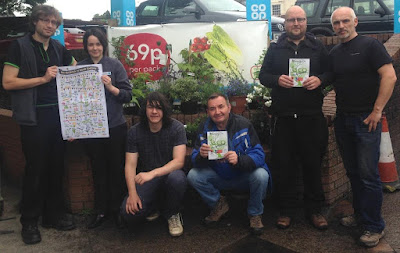
Eco volunteers outside the bee friendly garden in Brecon with Co-op staff who helped

What kind of support do you offer volunteers who sign up for these projects?


We can offer support to our volunteers through an induction and training programme. We also offer monthly supervision to all our volunteers so they can set themselves personal goals and targets and discuss any problems.

As well as receiving ongoing support through the entire volunteer activities, we also want to give all our volunteers the chance to control the direction of the programmes and have their say in the volunteering, so we encourage people to express their thoughts and ideas, and take control of their own volunteering when they feel able to.

Eco volunteers working outside Brecon Library to add a bee friendly planting

Tell us how your work fits in with that of other voluntary sector groups

We have a running partnership with lots of organisations such as Powys Association of Voluntary Organisations (PAVO) and the Brecon Volunteer Bureau, as well as working with the National Park volunteer programmes and Wildlife Trust. The volunteers are encouraged to work with other volunteer groups to promote networking and confidence. We also take referrals from other organisations in the third sector, such as Kaleidoscope and Gwalia Housing.

What is the most challenging aspect of working on this project?

Keeping an eye on all the projects! We now have six programmes running plus four outreach centres and twenty supporter volunteers who work in the centre, as well as another  thirty people volunteering on our specialist programmes.

Working with so many different groups and organisations takes a lot of concentration and logistics but it is fun to get it right, meet so many people and learn about their work.

Now tell us some of the rewarding aspects about working on the project

I have a lot of creative control over these projects which is a lot of fun and working with volunteers that get something out of the process is good, but also I value the chance to work on conservation and education as it's my background and what I have always wanted to be able to work in.

Eco volunteers building benches at the BBNP Mountain Centre in Libanus
L-R: Stuart, Fred, Elwyn, Joe, Aimee

What is the most valuable thing you have learnt since starting your role?

Organisation. I have always been very scatter brained but being back in a managing role has helped me focus more on planning my day.

What do you like to do in your own time when you’re not working for Brecon & District Mind? 

My wife and I run a dog boarding house, where we are licenced to keep six dogs, including our own, in our house while people are on holiday. And we have one dog of our own called Dec.

We also have a pet rat called Hugo who is a training rat that we are using to teach animal care. I am a keen artist and am currently on three local committees, including the Westenders Theatre Group Committee where I am Vice Chair. We are both performers in the local panto with Westenders every January and enjoy meeting up with the group for a few drinks and a good chat every week.


Many thanks to Matthew for telling us about the latest volunteer projects at Brecon & District Mind. 
If you would like to get involved then you can contact Matthew by emailing matthew@breconmind.org.uk or ringing 01874 611529.

The Eco Project is funded by WCVA.

Monday, 18 January 2016

Meet Mandy Pearce - Reablement Worker at Mid Powys Mind


In 2015 Mandy Pearce started as Mid Powys Mind’s new Reablement Worker, funded by the Lloyds Bank Foundation, in a new three year project to help support people in transition from hospital. 

Working originally with patients from Felindre Ward in Bronllys Hospital, South Powys (a ward offering acute inpatient mental health services) the Reablement Service offers much needed support to people coming home after a medium to long term hospital stay.

We caught up with Mandy recently at her Llandrindod base to find out more about the project has evolved since she started last summer.


What does reablement mean exactly?

The reablement approach is well known in physical health. It is newer in mental health. It is short intensive support, usually offered to people in their own homes, after a stay in hospital and during a period of ongoing recovery back in the community.

I have access to patients’ Care Plans, liaise with their Care Co-ordinators and also attend their discharge meetings. Once they have left hospital I then visit them and provide support depending on their needs. This can be very varied depending on individual situations. Two of my first clients had been long-term patients on the ward – one for 12 months. There was a lot of work to be done. People become quite institutionalised and it can be quite scary returning to the community. Even going to the corner shop can be hard.

Some people, meanwhile, are only in hospital for a couple of weeks and then quickly get back on track with their lives once they leave.

How does reablement make people’s lives better?

It provides additional support that hasn’t been there before. It’s about looking at people’s needs. Isolation is a key word really. The hospital reflects that sense of isolation back to the patients. They have been unwell at home for quite a long period, perhaps staying indoors, maybe even in bed. Then they go into hospital and are still quite isolated.

Originally I thought the role would involve carrying out practical tasks such as looking after a pet or going shopping. But people want to talk. That’s often their main need. We have to be flexible in our approach and try and meet people’s needs.

Who is eligible to receive the service?

When I started it was just available to ex-patients of Felindre Ward who are from the Radnorshire area of Powys. However, my remit has now been extended and I work very closely with the Crisis Resolution Home Treatment Team which is based at Bronllys Hospital. Staff in this team support people to remain at home, and when people are discharged from their care they can be signposted to me for further support.

How was the need for your post identified?

Colleagues at Mid Powys Mind originally identified a need through speaking to staff at Felindre Ward and the Crisis Home Treatment Team. They then worked on a funding bid and were pleased to receive an award from the Lloyds Bank Foundation to fund a 3 year project.

Key to my role is my link with Mid Powys Mind. Mind offers a comprehensive service with many different facets, and I can help people understand the service and access the right area. People might just sign up for counselling or go to the art group once a week. It’s whatever works for them. More often than not it puts routine back in to their lives plus it gives them the opportunity to spend time with others who understand.

I can also signpost people to Tim Skelcher, our 1:1 Recovery Worker. 


You mentioned isolation, what are some other typical difficulties that people face upon leaving hospital?

Yes, isolation is a key factor as well as low confidence and, of course, stigma. Living in rural areas is not only a contributing factor to isolation but can make someone feel that all the locals have an idea of what has been going on for them and although things are improving around awareness there still is a certain amount of stigma surrounding mental health issues.

Returning home from hospital can be daunting for patients as it can be a reminder of how unwell they were before their admittance to hospital. Properties have been left and the environment can be reflective of how unwell someone was. So, practical help in sorting and organising can be really helpful. There can also be a backlog of mail that needs attending to. This can be stressful depending on what it is.

How long does your support last?


I work with people for up to eight weeks following their discharge. However, if I feel they need further support I can request an additional four weeks. It can take a long time to get there sometimes.

I visit Felindre Ward regularly so that people know who I am and generally have a chat with the patients. There is not enough talking going on. Interpersonal skills are so important to people’s recovery. When I start working with a patient I often find that they just want to have a good chat.

How do people stay safe, well and independent once the reablement support has finished?


Some clients may already be in receipt of additional support via the Community Mental Health Team and other care organisations. However, as part of my post it is important to try to engage people with the service of Mid Powys Mind and introduce/support them to access possibly outreach groups and many other activities that Mind has to offer.

Tell us how your work fits in with that of other voluntary sector groups


At Mind we have been working hard to create better working relationships with partner organisations that can offer a specialist service to cater for a client’s specific needs. For example - drug and alcohol support, housing and tenancy. Also, doing something meaningful with their time when further along on their recovery journey can play a very valuable role, so volunteering themselves could be an option.

What are some of the hardest things about working on this project?

I suppose one of the hardest things about this job is that time is limited. During my time with a client I can develop a good working relationship and in order to do this there is a certain amount of trust and understanding realised. It is hard when our time comes to an end for them and all clients so far have said they wished it could have been for longer.

The nice things about working on the project?

The nice part of this post is, of course, seeing clients develop and their confidence build and an ability to push their boundaries and try new things.


Any other recent developments at Mid Powys Mind you can update us on?

We are developing a youth peer support group (18 – 25 year olds) which meets weekly on Tuesdays, 1 – 3pm, in the Training Room at the Resource Centre. It is great to be able to put young people in touch with their peer group and signpost them to other services that can be useful to them. We’re planning to work again with Owen Griffkin later in the Spring with more Havin’ A Laugh workshops. And a professional animator will be coming in to bring people from different generations together and interpret their stories using animation, so we’re very much looking forward to that. 


Many thanks to Mandy for telling us about the Reablement Service at Mid Powys Mind. You can contact Mandy by emailing re-able@midpowysmind.org.uk or ringing 01597 824411.

Thursday, 22 October 2015

Harts and Craft - Diane's story


Diane Hart, volunteer and member at Ponthafren Association, a mental health charity in North Powys, writes our guest blog post this week. 

Hi! My name is Diane and I have been a member of Ponthafren for five years now.

When I first attended I was in a very bad place in my head, I couldn't see the point in anything. It has only been recently that I have been able to see a future. My Community Psychiatric Nurse thought it would give me something to do and a reason to carry on.

For a very, very long time I was very shy. At first I just hid behind the laptop, which as a member I had use of, and I only spoke to people when I was spoken to. I still hide behind it sometimes but it is more of a safety blanket rather than a protective shield.

Slowly over time I joined in some art and craft classes which gave me a reason to attend Ponthafren. Back then they were not accredited so the number of people who attended didn't matter, which was a good thing because there were not many who were interested in learning how to make felt, or silk painting. Gradually I joined in other classes like sugar craft where I learnt to make edible flowers. The classes eventually became accredited and I now have three certificates for sugar craft.


Around that time I also joined an adult literacy class. Not that I had a problem reading or writing, but the tutor said he would help with interview skills and confidence building. Well, it did some good because my tutor asked me to give a ten minute talk to the other members on how my art and craft classes were helping me, which I did, and this became the first of many.

Because of my talk a very special lady, who became my friend, saw me and asked me to join the committee of Powys Mental Health Alliance. I did this for a couple of years before other commitments and ill health stopped me from carrying on.

Then, because of changes going on at Welshpool Ponthafren, classes stopped for a while and I found things very hard to cope with. I was having a bad time when someone from Newtown Ponthafren called me and asked if would I like to join a class they had there. I thought they said Arts and Crafts, but what they actually said was Art and Design. I was told that if they couldn't get the numbers up the class would have to stop. I knew how important classes were to me and I felt for the people in the group so I immediately said yes. 


Needless to say I had a very big shock when I realised my mistake. I was not only nervous attending a new place and meeting new people but to find out the course I had agreed to was a Level Two BTEC in Art and Design and they were already six weeks into it. I thought it wouldn't be too much of a problem as there were only a few weeks left. The other courses I attended only lasted ten weeks. I was reassured that I would be OK - I had an advantage over the other girls as I had a painting portfolio under my belt so I could use this as part of my work. I told my teacher at the time that I knew nothing about art but again I was reassured and I decided to stay.

Perhaps if I had known then it was going to take 18 months I might have thought differently. I am glad I didn't know as it was a challenge but one I am pleased I met.

After a few weeks the teacher left and the new lady did things differently which at the time I found difficult but over time I warmed to her. Esther Thorpe opened my eyes to appreciate art. Even if I didn't like the style, I learnt to understand and appreciate it. With Esther's encouragement I have experimented in different techniques of painting and drawing. Recently I have dabbled in sculpture which I not only found therapeutic but I found I wasn't bad at it. So, over the last couple of years, I have mounted up thirty four certificates so far.

Apart from the BTEC the others were ten week courses of card making, calligraphy, pottery, sculpture, painting, drawing, paper flower making, and jewellery making with recycled paper. I also attended computer classes to refresh my skill and learn new skills like digital photography and playing with my pictures on the computer.

A couple of years ago I also started my own class where I teach others arts and crafts in Welshpool Ponthafren, putting to good use what I have learnt. 

I have also had the pleasure of working with an artist painting a mural celebrating 60 years since the last commercial steam train went through Welshpool. This is up for posterity and although not many know I had a big hand in it my friends know and I now have the confidence to point it out to people at the side of Welshpool Library.

Last year I attended a 4 day course which, apart from my BTEC, was one of the hardest courses I attended. It was not that the work was hard but I wasn't sure of myself. However, now I am a volunteer support worker at Welshpool Ponthafren and I know it was the right thing to do, for not only is it giving me the confidence to socialise I am attending more courses to help me become a better support worker.

I am still attending classes teaching and volunteering and I am now the chair person of a small volunteer group called Meeting Point Montgomeryshire. Last month I also joined a creative writing and poetry group. I have already had some of my work published, so who knows what the future holds. I am also helping to make things for the Welshpool Carnival next year. This is not connected to Ponthafren but through Ponthafren I met people who asked me to get involved with outside interests. In a way though it has everything to do with them because it was through them and other agencies that I feel able to do what I do. Even though some days all I want to do is crawl up in my bed and stay there having responsibilities and reasons to get out of bed has been a literal life saver.

Throughout July this year I did probably the hardest thing I have ever done and that was to go to shops in Newtown and Welshpool canvassing for money for charity. I had pledged to shave my hair all off to raise money and in doing so I raised £700.00.

I still have bad days but, as my CPN says, we all have blips and if we can see them as that they don't seem so dreadful. All I know is, five years ago I wouldn't have dreamt of being able to write what I have written, never mind see myself doing what I have done, for I saw no future for myself.

So I would like to say a big thanks to Ponthafren for all the help they have given me over the years and a big thanks for not seeing my visual and physical disability as a problem to becoming a volunteer.

And to you reading this - I hope it helps you to see a more positive future, for if I can do it so can you. I think life can be like climbing a mountain. It looks impossible but if you only look at one step at a time before you know it you have reached the summit. Don't worry if you slip a few times. I did many times. It’s not the slipping that matters, it's the getting up that counts.

Blessed be - Diane.

Many thanks to Diane for sharing her story with us. If you would like to tell us your story, then please get in touch.


Photos of Diane's art and craftwork courtesy of Diane Hart.

Thursday, 24 September 2015

Rekindle's Small Steps Project

Rekindle's young people, trustees and staff with Lord Alex Carlile for the summer relaunch
Kemal Keeble is the Recovery Practitioner at the mental health charity Rekindle based in Newtown, North Powys. I went to meet him, his colleague Diane Williams, and some of the young people they work with a few weeks ago at their lovely new premises at Market Street. Kemal runs the Small Steps Project at Rekindle, so he and the young people have now worked together to produce this guest blog post for us.

Some weeks ago I was asked if Small Steps would like to post a blog on the Powys Mental Health blog site run by the mental health team at Powys Association of Voluntary Organisations (PAVO).

The idea being that we could get some of the young people we are involved with actively writing about their own experiences of mental health and their own roads to recovery. That we might write a little introduction to our service, the things we do, and explain how what we do aids the community we live in. So here I am today putting those words into action!

A little about Rekindle and “The Small Steps Project”………


Rekindle is a small charity that was initially set up some years ago as an intervention service for people who are struggling with mental health. In June 2013 Rekindle's thinking was that the Small Steps Project would restart concentrating on work with 16 – 25 year olds in the Montgomeryshire catchment area. In June 2015 Small Steps moved to new premises on Market Street and has developed into a community hub for the young people we support. 

To coincide with this move we held a celebration at The Elephant and Castle on Saturday 11th July 2015. It was a unique opportunity where organisations could meet Rekindle's trustees, staff,and young people. Lord Alex Carlile of Berriew CBE QC, Rekindle's patron and the guest of honour, attended. He gave an informative speech about the impact of mental health on his own family and why he helped set up Rekindle. Rekindle’s trustee Dr John Scott, Small Steps Project Coordinator Diane Williams, with myself gave a short presentation about the impact of mental health on our community. This was further brought home by a number of young people talking about their own experiences of mental health and how Small Steps had helped them on the journey to recovery.

What we do

At Small Steps we work with young people who are having difficulties. The first meeting can be a very worrying situation for someone who might have problems. We understand how challenging it can be for someone to build up the confidence to walk through our door, meet people they do not know, and then be able to talk about what it is that is causing them to feel at a low ebb. Young people can struggle due to being socially isolated or not having the confidence to meet new people. We often tell them how it’s OK to bring someone along for moral support on the first meeting.

In some of the work we do we can find ourselves mediating and representing clients on a whole variety of matters, for example -  support with benefits, estrangement, appointee duties, anti-social behaviour, appropriate adult, advocacy, physical and mental health, doctors' appointments and various assessments.


Our support means that people in the age group of 16 – 25 can access help and have however much time they need to work through any issues they may have. It means that they are open to our service for what could be many years should they need help. It is a core reason that Small Steps was set up initially as an early intervention service so that young people can understand they do not need to rely on services all their lives, that they can manage their own wellbeing and gain the valuable skills they need to function independently in our community.

At Small Steps we are all about being reactive to our client’s needs, empowering young people to succeed and move up in the world.

Over the past year we have often listened to what our clients have spoken about and also challenged them to try new and different things. We have found this to be a real turning point in our young people’s lives. They have met new people, and made new friendships and self-discoveries along the way. Some of the activities we have run include - photography expeditions to local places of interest, badminton, football, and Britain’s Got Talent auditions. Not to mention sponsored walks. The response from our young people has been that they do like being able to have time out from their normal everyday lives as it gives them new experiences and more enthusiasm for what happens locally in Montgomeryshire.


"Mountains" - by a young person involved in the Small Steps Project

"I am an 18 year old living in Newtown! To everyone else I come across as an always happy, bubbly person. However, even people like this may only be acting. I am on the road of recovery so I am very lucky but I only have achieved this by pushing myself and coming to Small Steps which was the best thing I ever did.

My life has been and is a journey just like anyone else’s just there has been mountains for me to climb. At first I found them too high but it didn’t stop me and it shouldn’t stop anyone else either. I now have to keep climbing these mountains and yes, even now some mountains may grow in front of me, trying to stop me on my path, but I know the best thing for me to do is not let it knock me back or put me down just climb it. I’m not saying it will be easy but with the right support and positive thinking it is possible. I know positive thinking is very hard as I struggle myself to keep positive but I know I am getting the support I need to work on this with Small Steps and anyone else that needs help should go to them too. So no matter how big or small your mountains are you can climb them and get to the other side of them. To cope with these mountains I find things to do such as:

  • Drawing.
  • Singing.
  • Covering my walls in happy quotes to look at when I wake up.
  • Also the main one - surrounding yourself with positive people."

Small Steps Project update


We have recently been nominated for the Powys Business Awards and have got through to being finalists. Part of being a finalist was to have a production company make a short film about Small Steps on 19th August 2015. 

Filming day at Rekindle's Newtown premises
All at Rekindle are now waiting in anticipation for this year’s fiercely fought “charity category”. The Judges' decision is due to be announced live at the Powys Business Awards Ceremony Dinner on Friday 25th September 2015.

UPDATE: Rekindle's Small Steps Project won the Social Enterprise/Charity category of the Powys Business Awards on Friday 25 September 2015. Congratulations!

Kemal told me: "We are very honoured to have won and feel it is positive recognition in raising awareness of the good work that is ongoing throughout Montgomeryshire by The Small Steps Project. Hopefully now we will be able to secure the financial funding we need to continue to support Montgomeryshire's young people as they are potentially our future here in Powys."

Kemal & Diane receive the Powys Business Award
from Mid Wales Housing Association
Many thanks to Kemal and all at Rekindle for telling us about their work. If you are a young person reading this, what do you do to help cope with your "mountains"? Tell us in the comments box below.