Showing posts with label Machynlleth. Show all posts

Tuesday, 16 April 2024

Machynlleth Makerspace – learn, socialise and collaborate

Keys to the new premises in Machynlleth!

Pat Cook has been a volunteer at Makerspace in Machynlleth since the start of 2024. She says: “I can’t even begin to describe how important it has been to find such a welcoming space here and I want to do everything I can to ensure its success and continued growth.”

I asked Pat to tell us more about the work of Machynlleth Makerspace, also called Machspace. Cassian, one of the directors at Machspace, contributes too.


What is a Makerspace?

Pat: It is what it says - a space where there is the room and equipment and advice, if necessary, for members to make, mend or repair. Often people don’t have the room or the equipment they need to make or mend and this lack of facilities contributes further to the amount of waste that our throwaway society produces.

Cassian: There are lots of makerspaces (sometimes called hackspaces) all over the UK and the rest of the world. The Hackspace Foundation is a UK organisation helping people to set up and run makerspaces.


How did Machynlleth Makerspace come about?

Cassian: It was 2021 when Katy Fowler, a former director, suggested the idea in a local WhatsApp group. Me and Avery were immediately interested, because Avery had been a member of Swindon Makerspace and had been wishing for one in Mach since he moved here just before the first Covid lockdown. I went with him a few times as a guest and enjoyed it very much.

Many people were interested at first, but there were four of us who were very dedicated. We met weekly to chat about how to move it forward. None of us had done anything like this before, but in early 2022 we formally founded the Community Interest Company (CIC) - me, (they/them), Avery Rowe (he/him), Katy Fowler (they/them) and Chris Richards (she/her). We met regularly and held semi-regular "open days" at the local Bowling Club's function room, but really struggled to find a venue in Mach to settle full-time.

Then in Summer 2023 there was a sudden flurry of action: we learned about the Social Value Forum Development Fund a month before its deadline at the same time as we found an empty shop that wasn't properly on the market for new tenants yet - it was a very intense month of writing the grant application. Then the grant was awarded, we signed the shop lease, and worked very hard to make the kitchen and bathroom suitable for member use as quickly as possible. The grand opening was on 20 October 2023. The group went from no venue and no money to opening our makerspace in about 3 months!

That was just under 6 months ago. The SVFDF target was 50 members in 18 months, and now at only 6 months we have over 70 members already! It's been a whirlwind. I still haven't caught my balance, but when I stop and catch my breath I feel in awe of what we've achieved.

Pat: I know from personal experience both the emotional and time consuming costs and benefits of such altruism and how exceptional it is to find there are still people who care about the community they live in and want to improve it for everyone’s benefit.


Demolition work to improve the space!

Where is it based?

Pat: It’s in the centre of Machynlleth in the Old Town Hall almost opposite the Clock Tower. The ‘Happy Bench’ is directly outside, a useful space to sit and think and talk to other people.

Tell us how you got involved and about your role


Pat: I moved to Machynlleth two years ago from Brecon. Lockdown was horrendous for me personally, it destroyed what was left of my limited mobility and everyone on the estate was impacted by the open selling of drugs and the resulting fights and antisocial behaviour. Two years earlier I had to have my horse put down and the year before that the Community Art Workshop I had helped to set up and run had to be shut down. I had already applied for a transfer and when my best friend and neighbour died I moved to Machynlleth.

I now live in a beautiful town, with views of the mountains from my living room window, but I didn’t feel ready to be old and wanted more from my life. I found Machspace by accident when, on one of the days I could walk, I was on my way to a Credu Coffee Morning. I couldn’t believe my luck. Here was the opportunity to be involved again with a community of Makers, only this time without the responsibilities.

My physical limitations prevent me from being more active but I have run an Open Day and helped people explore the potential that lino printing offers. It was great to once again see people experimenting with new ideas and techniques and to meet people in such a friendly and sociable space.


What kind of equipment is available for members to use in the space?

Pat: Considering the limitations of space the variety of equipment available is amazing. Woodworking tools, including a mitre saw. It was this that really excited me as now, once I have bought the materials, I can frame the pictures that I’ve painted. Sewing machines, including an industrial one for heavy duty fabrics, a peg loom, a soldering station, lino cutting tools, and a newly acquired laser cutter and 3D printer are available. It really is a Makerspace in being able to provide access to equipment that you wouldn’t have at home, as well as the space to use it.

It’s a members-only space – why, and what are the benefits of membership?

Pat: Machspace is available for members to use 24/7. Because it is a totally free and unsupervised space it is important that both the space, the equipment and any other people present are treated with respect and consideration. It is easy to join as a member. There is a 30 minute induction during which the conditions of membership are made clear, then you sign an agreement to abide by these conditions. After this the new member is given a key fob which means you can access the space at any time that suits you. Especially useful if you’re an insomniac or work antisocial shifts or you’re a night-functioning person.

How is being a volunteer at Machspace different?

Pat: I seem to have spent a lot of my life volunteering for different community groups and organisations. Perhaps the biggest difference is that being a volunteer for Machspace is the inclusivity. There are regular volunteer meetings and a WhatsApp volunteer forum which provides the opportunity for volunteers to be actively involved in the development and plans for Machspace’s activities and growth as an important asset to the community.

What happens at the fortnightly Open Events?


Pat: The Open Events provide an opportunity for anyone who is interested in finding out more about Machspace, the equipment available, how to become a member and to answer any questions. Usually there is a making activity taking place during the 2 hours of the Open Event and anyone is welcome to join in and meet other makers in a friendly and welcoming environment with the added benefit of drinks and snacks.
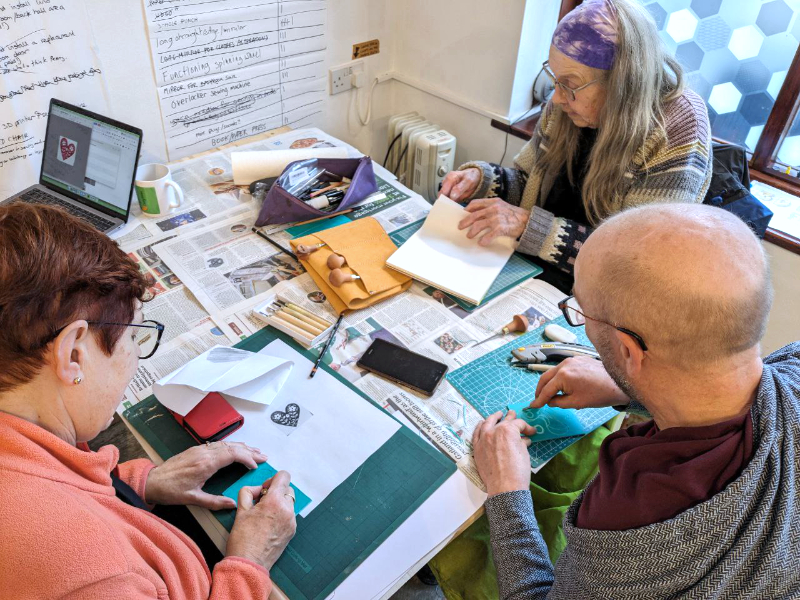

Roz, Pat and Stu lino cutting

Tell us how being part of Mach Makerspace has impacted on your mental health

Pat: When I found Machspace my head was not in a good place. My GP had referred me for counselling and I had just been for my third session. I was trying hard to overcome my anger, despair and grief at having to accept that I was no longer able to know where my youngest son had been placed by the mental health services.

My youngest son was diagnosed with schizoid-affective disorder in 2000. I haven’t seen him since 2014 when he decided I was not his mother. He took this decision as a result of being able to access amphetamines despite being on a section 3 and under the ‘safe’ care of an inpatient mental health unit.

Previously I was able to accommodate the distress this decision caused me by riding my horse, making pots and printing at the workshop and talking to my neighbour. Now that none of those options were available I didn’t know how to deal with it.

Finding Machspace has provided me with the help I needed to accept the loss of my son. It has provided me with friendship and most importantly made me want to start printing again. It has helped me to begin the process of healing myself and to regain a positive, rather than a negative and anger-filled state of mind. I know that my mental health has improved because I am now able to look forward to making my lino prints. Rather than dwelling on the negativity of grieving for something that cannot be changed I can remember my son’s achievements with admiration for what he managed to do despite his devastating mental illness.


Why is accessibility important at Mach Makerspace


Pat: Everyone is different and has different needs. By being accessible 24/7 and with the wealth of equipment available Machspace caters for the needs of people who might not feel comfortable in a more formal environment and enables the development of individual skills and confidence.

What are the interaction badges and why did you introduce them?

Pat: Not everyone wants to talk to other people, some people want to talk but lack the skills to initiate a conversation with someone they don’t know. The badges provide a clear visual signal to anyone of each individual’s needs and requirements when in a social space so that everyone respects each other without having to endure sometimes painful and difficult discussions.

Cassian: I first encountered interaction badges at Autscape, which is an annual conference run by and for autistic people. It's a neurodivergent-default space, which is to say, it's assumed by default that most of the people there are neurodivergent and the space is primarily designed for neurodivergent people - the opposite of the rest of the world, really! The interaction badges are intended to allow autistic people to clearly and non-verbally self-regulate comfortable social interaction with each other.

We introduced them because they're so helpful and important in neurodivergent spaces like Autscape, and we want to be inclusive of neurodivergent people. I'm autistic and I have ADHD, so it's close to my heart.


Are there currently, or plans for, other Makerspaces in Powys?

Pat: There should be. I believe that physically making, mending and repairing provides an invaluable resource for developing self-confidence and respect for your own and other people’s achievements. Making and developing skills with different equipment and materials is an essential part of what it means to be a social human being. It provides a means to overcome the feelings of negativity that living in such an unequal society can often induce.

Cassian: I definitely agree, every town needs a makerspace as much as it needs a library or a community centre. Humans have been making things together for as long as there have been humans! Creativity and art and problem-solving are all hardwired in us, and humans are an incredibly social species. In makerspaces you can really see that we all inherently understand that sharing skills and materials is good for everyone involved. It comes so naturally to us; we've been doing it for thousands of years.


Many thanks to Pat and Cassian for telling us about the work of Makerspace in Mach. If you want to find out more you can contact the organisation by emailing hello@machspace.org or check out their website – machspace.org

Thursday, 5 October 2017

5 Uchafbwynt digwyddiad Iechyd a Lles Machynlleth / Top 5 Highlights from Machynlleth Health & Wellbeing event

Helen Roberts, Cathy O'Dwyer a Sioned Jones Pritchard
Ddydd Llun es i draw i’r digwyddiad hwn yn Llyfrgell Machynlleth. Sioned Jones Pritchard, un o’m cydweithwyr yn y tîm Cysylltwyr Cymunedol gyda PAVO drefnodd y digwyddiad, ar y cyd gyda thîm Ymwelwyr Iechyd Bwrdd Iechyd Addysgu Powys.

Mae digwyddiadau fel hyn yn rhagorol i staff rwydweithio a darparu gwybodpaeth ar wasanaethau i’r cyhoedd sy’n ymweld â’r digwyddiad. Byddaf wastad yn dod o hyd i rywbeth newydd i rannu gydag eraill fel rhan o’r Gwasanaeth Gwybodaeth Iechyd Meddwl. Felly i’r rhai fethodd y cyfle i fynd i’r digwyddiad, dyma fy 5 uchafbwynt i o’r sesiwn.


On Monday I went along to this event at Machynlleth Library. It had been organised by Sioned Jones Pritchard, a PAVO colleague from the Community Connectors’ team, in conjunction with the health visiting team of Powys Teaching Health Board.

Events like these are great for staff networking and providing information about services to members of the visiting public. I always manage to find out something new to tell others about as part of our Mental Health Information Service. So, for those that didn’t get chance to go along on the day, I thought I would highlight five of my favourite “finds” from the session.

Eleri Lewis a Anita Schwartz
1. Gwasanaeth Awtistiaeth Integredig Newydd Powys (IAS) / New Integrated Autism Service (IAS) Powys

Gwasanaeth newydd yw hwn i bobl o bob oed yng ngofal y Gwasanaeth Iechyd a Gofal Cymdeithasol sydd â chysylltiadau cryf ag addysg. Bwrdd Iechyd Addysgu Powys yw’r bwrdd cyntaf trwy Gymru i gynnig y gwasanaeth hwn a gyllidir gan Lywodraeth Cymru “oherwydd dywedodd unigolion awtistig, eu rhieni a gofalwyr bod angen mwy o gefnogaeth arnynt”.

Bu Anita ac Eleri’n egluro y gall ceisiadau am gymorth ddod gan weithwyr proffesiynol yn ogystal ag unigolion awtistig neu eu teuluoedd a gofalwyr. Ymhlith enghreifftiau o wasanaethau a ddarperir mae: cymorth gyda phroblemau emosiynol, pryder a rheoli dicter, meithrin sgiliau cymdeithasol, grwpiau hamdden a chymdeithasol, cymorth a hyfforddiant i rieni/gofalwyr a datblygu sgiliau bywyd dyddiol.

Un pwynt mynediad sydd ar gyfer pob cais: rhif ffôn: 01874 712607 neu drwy ebostio: powys.IAS@wales.nhs.uk

This new all age service is jointly hosted by Health and Social Care with strong links to Education. Powys Teaching Health Board is the first in Wales to provide the service which is being funded by Welsh Government “because autistic individuals, parents and carers told us they needed more support”.

Anita and Eleri explained that requests for support can come from professionals and also individuals with autism or their families and carers. Examples of services which are being provided include: support with emotional issues, anxiety and anger management, social skills development, leisure and social groups, parent/carer support and training and daily living skills development.

There is a single point of access for all requests, tel: 01874 712607 or email: powys.IAS@wales.nhs.uk

Teresa Peel Jones
2. Siop gyntaf Credu – Cysylltu Gofalwyr yn agor / Credu Connecting Carers’ first shop opens

Teresa Peel Jones yw Rheolwr Datblygu’r Siop a’r Hyb gyda Credu a bu’n sôn am siop elusennol gyntaf y sefydliad a agorwyd yn 38 Heol Maengwyn, Machynlleth. “Nid siop yn unig yw, ond hyb cymunedol hefyd” meddai. Byddwn yn annog ymwelwyr i daro heibio am baned a sgwrs, i ymuno â’r gweithgareddau celf a chrefft ac i ddefnyddio’r ystafell gyfarfod sydd ar gael i’r gymuned. Hefyd cynigir cyfleoedd hyfforddiant a gwirfoddoli. Cynhelir sesiynau Paned Gofalwyr ar ddydd Iau cyntaf bob mis am 2 o’r gloch. Gellir dysgu mwy drwy ffonio 01654 703926 neu ebostio: shops@credu.cymru

Dywedodd Teresa: “byddem yn hoffi gweld cymdogion ein cymunedau lleol yn ymgysylltu ac yn helpu ei gilydd. Yn ein barn ni, mae bod yn ofalwr ymroddedig yn gadael llawer gormod o bobl wedi blino’n lân, yn unig (yn ddiangen) a heb digon o gyfleoedd ar gyfer gweithgareddau hamdden ac i fynegi eu hunain. Rydym yn benderfynol o fynd i’r afael â hyn, ond gwyddom mai’r unig ffordd y gellir cyflawni hyn yw ar y cyd gyda gofalwyr a’u cymunedau.”


Teresa Peel Jones is the Retail and Hub Development Manager at Credu and told me all about the first of the organisation’s charity shops which opened in Machynlleth at 38 Heol Maengwyn. It’s described as: “not just a shop but a community hub”. Visitors are encouraged to pop in for a cuppa and a chat, join in arts and crafts workshop activities and use the community meeting room. There are also training and volunteering opportunities. The Cuppa for Carers’ meetings take place on the first Thursday of every month at 2pm. Find out more by ringing 01654 703926 or emailing: shops@credu.cymru

Teresa said: “we’d like to see neighbours within our local communities engaging and helping each other. We believe that being a committed carer leaves far too many people exhausted, unnecessarily isolated, and without sufficient opportunities for essential recreation and self-expression. We are determined to address this, but know that this can only be achieved in association with carers and their communities.”


3. CAMAD – Swyddog Prosiect Llwybrau newydd yn cychwyn / CAMAD – new Pathways Project Officer starts

Croeso cynnes Miriam Davies sydd wedi cychwyn ar ei swydd newydd yn ddiweddar gyda CAMAD fel Swyddog Prosiect Llwybrau, i gefnogi pobl i ddod i wasanaeth taro heibio’r sefydliad i bobl sy’n byw gyda phroblemau iechyd meddwl yn ardal Machynlleth. Gweler cyflwyniad gan Jeremy Richards, y cydlynydd blaenorol ar brosiect Llwybrau yma.

Nid oedd Miriam yn gallu bod yn bresennol yn y digwyddiad yn Llyfrgell Machylleth oherwydd roedd ei sesiwn hi’n un pryd! Fodd bynnag, daeth un o’i chydweithwyr yn CAMAD, Holly Fairclough, draw yn ei lle hi. I ddysgu mwy am Brosiect Llwybrau, ffoniwch: 01654 700071 neu ebostiwch: office@camad.org.uk


Welcome to Miriam Davies who started at CAMAD recently as the new Pathways Officer, supporting people to attend the organisation’s drop in service for anyone living with mental health issues in the Machynlleth area. Jeremy Richards, the previous co-ordinator, wrote about the Pathways Project originally here.

Miriam couldn’t make the event at Machylleth Library as the drop-in was open at the same time! However, her CAMAD colleague Holly Fairclough attended instead. To find out more about the Pathways Project ring: 01654 700071 or email: office@camad.org.uk

Sian Roberts
4. Chwilio am wirfoddolwyr ar gyfer cynllun Buddsoddi yn eich Iechyd / Invest in your Health: volunteers sought

Dywedodd Sian Roberts wrthyf bod angen cefnogwyr gwirfoddol ar gyfer y rhaglenni Buddsoddi yn eich Iechyd -rhaglenni iechyd a lles 6 wythnos o hyd sy’n cael eu cyflenwi am ddim ar hyd a lled y sir. Ym Machynlleth mae’r rhaglen nesaf, fydd yn rhedeg rhwng 25 Hydref - 29 Tachwedd yn yr ysbyty, 10am – 12.30pm, ond mae angen gwirfoddolwyr ar draws Powys, felly nid oes rhaid ichi fyw yn y Gogledd!

Bydd y cefnogwyr gwirfoddol yn gyfrifol am nifer o dasgau – mynychu’r rhaglen a sesiynau hyfforddiant cysylltiedig, cymryd rhan mewn cyfarfodydd monitro ansawdd, a gweithio’n agos gyda’r tîm Buddsoddi yn eich Iechyd i groesawu cyfranogwyr, dosbarthu taflenni’r cwrs, cyd-hwyluso agweddau ar y rhaglen, ac ychwnaegu profiadau personol i gynnwys y rhaglen. Telir costau teithio.

Gellir dysgu mwy am y swydd wirfoddol hon drwy gysyltu â Sarah Cronin, Rheolwr Datblygu’r Ganolfan Rheoli Cyflyrau Hirdymor, Bronllys, Aberhonddu, LD3 0LU. Ffôn: 0800 169 5586 neu drwy ebostio: sarah.cronin@wales.nhs.uk


Sian Roberts told me that volunteer peer supporters are required for the free Invest in your Health 6 week health and wellbeing programmes which are delivered around the county. The next programme is actually in Machynlleth, running from 25 October until 29 November at the hospital, 10am – 12.30pm, but volunteers are required across Powys so you don’t need to live in the North!

The volunteer peer supporters will have a number of tasks – attending the programme and related training sessions, participating in quality monitoring meetings, and working closely with the Invest in your Health team to welcome participants, distribute course hand-outs, co-facilitate aspects of the programme and add personal experiences to the content of the programme. Travel expenses will be reimbursed.

You can find out more and apply for the position by contacting Sarah Cronin, Development Manager at the Centre for Long Term Condition Management, Bronllys, Brecon, LD3 0LU. Tel: 0800 169 5586 or email: sarah.cronin@wales.nhs.uk

Nia Llywelyn
5. Awyddus i gynnig gwasanaeth dwyieithog? Gall Menter Iaith Maldwyn eich helpu! / Want to provide a bilingual service? Menter Iaith Maldwyn can help!

Sefydliad lleol yng Ngogledd Powys yw Menter Iaith Maldwyn – un o 24 o Fentrau Iaith ar hyd a lled Cymru. Mae’r sefydliad bywiog hwn yn gweithio gyda phobl a phlant o bob oed ar draws Sir Drefaldwyn. Ei nod yw rhoi cyngor a chymorth i unigolion, sefydliadau a busnesau yn yr ardal, yn ogystal â threfnu gweithgareddau fydd yn codi proffil y Gymraeg. Mae swyddogion PAVO yn awyddus iawn i ddysgu am fentrau sy’n gallu ein cynorthwyo ni, yn enwedig dysgwyr Cymraeg ein timau, i ddysgu mwy o’r Gymraeg a defnyddio’r iaith yn ein bywydau gwaith bob dydd.

Roedd Nia Llywelyn hefyd yn hyrwyddo’r diwrnod Shwmae Su’mae, ar 15 Hydref, “cyfle i gael hwyl a rhannu’r Gymraeg – yn y siop, y ganolfan hamdden, yn y gwaith, yr ysgol,y caeau chwarae a gyda ffrindiau.”


Menter Iaith Maldwyn is a local organisation in North Powys - one of 24 language initiatives covering the whole of Wales. This vibrant organisation works with people and children of all ages across Montgomeryshire. The aim is to give advice and support to individuals, organisations and businesses in the area, as well as organising activities to raise the profile of the Welsh Language. Here at PAVO we are really keen to find out about initiatives which can help us, especially the Welsh beginners in our teams, learn more of the language and put it to use in our everyday work lives.

Nia Llywelyn was also promoting Shwmae Su’mae Day, on 15 October, “an opportunity to have fun and share the Welsh language – in the shop, leisure centre, work, school, playing fields and with your friends.”


Wrth gwrs, roedd cynrychiolwyr llawer mwy o sefydliadau’n bresennol ddydd Llun ar wahan i’r rhai a nodwyd yn barod, megis Heddlu Dyfed Powys, Gwasanaeth Tân Canolbarth a Gorllewin Cymru, Cyngor Sir Powys, Age Cymru, Ymwybyddiaeth a Chymorth Asbestos Cymru, Canolfan Cyngor Bro Ddyfi a chydweithwyr PAVO o Brosiect Cynlluniau Cyfeillion Powys a’r canolfan Gwirfoddoli. Prynhawn gwych ym Machynlleth – os oes gan unrhyw un unrhyw gwestiynau, gallwch anfon neges isod, neu ebost atom ar: mentalhealth@pavo.org.uk, neu drwy ffonio 01597 822191.

Of course, there were representatives from many other organisations in attendance on Monday besides those I have already mentioned, including Dyfed Powys Police, Mid and West Wales Fire Service, Powys County Council, Age Cymru, Asbestos Awareness & Support Cymru, Bro Dyfi Advice Centre and PAVO colleagues from the Powys Befrienders’ Project and the Volunteer Centre. All in all an excellent afternoon in Machynlleth – if anyone has any queries then just post a comment below or send an email to us at: mentalhealth@pavo.org.uk, or ring 01597 822191.

Monday, 20 March 2017

Therapeutic gardening in Machynlleth


At the start of a new gardening year we talk to Kate Doubleday, Garden Volunteer Co-ordinator at Gerddi Bro Dyfi Gardens in North Powys. Kate tells us more about this therapeutic open space for people which is also beneficial to local wildlife.

What is the aim of the project?

Gerddi Bro Ddyfi is an organic wildlife community garden in the heart of Machynlleth. It is a people-led project, where the volunteers can choose their own activity. The aim is to create a nurturing, peaceful environment where everyone can feel supported and gain a sense of belonging. Our volunteer days are on Tuesdays and Thursdays between 10.30am - 4pm. We provide refreshments and have a volunteer shelter where people can take refuge in the rain. Throughout the year we also offer a range of one day activity workshops in scything, willow weaving, bird watching, and green woodworking for example.

Tell us more about your role at Gerddi Bro Ddyfi Gardens?

My role is mainly to facilitate a group of volunteers to enjoy and explore the garden. I work with a dedicated volunteer committee, and none of it would happen without their efforts.

My role is multi-faceted, and I go from gardening with the volunteers to liaising with Community Psychiatric Nurses to sitting in fundraising meetings.

I also work with the community nursery group doing wild play and environmental education with Early Years, and I’ve worked with youth clubs, doing outdoor work and graffiti projects with young people. The youth club was instrumental in the design aspect of the garden in the early days.

How long have you worked there and what drew you to the role?

I’ve worked at the gardens since 2008. Myself and a colleague, Leigh Munton, had both previously worked in therapeutic gardening roles and saw a need for this in Machynlleth. We ran short horticultural courses in the community and realised that when people had finished these one-off courses there was no way for people to carry on gardening in a social way.

Having worked at the Martineau Gardens in Birmingham previously I’d seen the value of a permanent therapeutic garden and how much this can provide a community. I’d experienced the incredible power gardening has on our wellbeing.


Tell us about the volunteers at the gardens

They’re fantastic! The garden wouldn’t be what it is without our volunteers, both on the ground and on the committee. We have a dedicated core group, who are all ages and from a variety of backgrounds, who turn up whatever the weather and maintain the garden for the community. Some of them have been coming for years.

What kind of work do they get involved with?

We do a range of activities, from weeding to woodwork, to planting flowers to attract wildlife to maintaining the vegetable beds.

How does a typical day pan out?


The day always starts with a cup of tea and a catch-up, and often some cake too! There’s usually a list of things that need doing, and this depends very much on the season, but people lead their own activities, and they can do as little or as much as they want. You can work alone or in a team – people have their own preferences.

Things always get exciting when we’re preparing for an event. It’s good to have something to work towards.

Who can volunteer to join the project?


Gerddi Bro Ddyfi is open to anyone from the community. We have good wheelchair access and hope to be as inclusive as possible. We’re particularly open to people who may feel excluded or who are having challenging life experiences.

What kind of support do you offer to the volunteers?

I see myself as a facilitator to help people come together in a beautiful space to socialise and connect with one another, and with nature. I aim to always provide a listening ear too. In some cases I signpost people to receive further support.


How does volunteering in a garden environment impact on people’s mental health?

Research shows that the act of looking after plants, as well as being active outdoors, is beneficial for a person’s mental health.

Horticulture as a therapy differs from other therapies in that it works with living entities which have their own needs and requirements. Through nurturing these entities, people become involved in something outside of themselves and this process can help them feel less isolated and more connected with the social and natural world, as well as developing a sense of pride and accomplishment.

Volunteers also interact with visitors from the community and this is clearly beneficial for their confidence, especially if they feel stigmatised.

Tell us how your work fits in with other voluntary sector groups


We work closely with the volunteer bureau, Community Action Machynlleth & District (CAMAD), also based in Machynlleth, which often sends volunteers our way. We’ve recently been building bridges with Ponthafren Association in Newtown, and we’ve done joint events with Edible Mach, Bro Ddyfi Advice Centre, and Mid Wales Housing, under the banner Bwyd Dyfi Partnership.

What are the main challenges of your role?

Fundraising, without a doubt, is the biggest challenge. It’s very difficult to raise funds alongside the work I do on the ground, and obviously with austerity policies things are getting harder. Working with volunteers is extremely rewarding, although sometimes it’s challenging, and I’m learning all the time.

Tell us about some of the most rewarding work you have done at the Gardens


I’ve found it very rewarding to be involved in providing access for people with physical disabilities, enabling them to garden and to take pleasure from outdoor work. The greatest reward is to see the volunteers connecting and growing to support one another, so that my role becomes marginal. Some of them become very close friends. Also it makes me happy to see volunteers go on to find jobs afterwards, with greater confidence, having used the gardens as a stepping stone. Having been a volunteer myself in Birmingham during a difficult time in my life, it gives me pleasure to be able to give something back.


If you would like to get involved at Gerddi Bro Ddyfi Gardens contact Kate on 07941 908 891 or check out the website.

Tuesday, 8 March 2016

CAMAD's Pathways Project in Machynlleth


This week's guest post is from Jeremy Richards who works as the Pathways Co-ordinator at CAMAD - Community Action Machynlleth & District - in North West Powys. His role is to create a safe environment and facilitate and enable people to speak freely about their issues if they wish. 

Now that CAMAD’s Pathways Project has reached its 6 month mark of Big Lottery funding it seems a good time to write.

To be fair it is longer than that we’ve been going as we had Awards for All funding to pilot the project from November 2014. It started off as a Thursday afternoon service, but now it’s Monday afternoons too, and on Tuesday afternoons we have Art Sessions with a wellbeing slant.

It’s much more enjoyable, much less heavy than I anticipated. Although people are free to share their hardships, and do, more often than not we talk a lot of amiable nonsense.


Perhaps it’s very obvious but it seems to me that once the elephant in the room has been uncovered (depression, anxiety) it loses a lot of its power and it becomes something that’s understood, something that doesn’t need to be the principle focus. This is important – when you’re living alone with your demons they can become your whole life, even to such an extent that you don’t know where you’d be without them.

Our set-up is very simple. We have a little lounge area, with music playing and comfy chairs and a communal kitchen with a big round table where people do informal art on Thursdays too.

Sometimes it gets very busy and chaotic but I kind of like that. People shift around from room to room, chatting in different combinations. No-one has her own chair or particular sub-group!

Something I must flag is how brilliantly we have been supported since the outset by the Community Mental Health Team. Most notably, in the frequent visits to the drop-in they really help to demystify the world of mental health care to those who may be embarking upon it for the first time, and they are an informal yet informed ear for anyone who has a particular issue I may not be qualified to address.

I have found it deeply moving how mutually supportive the group is drawing on their own difficult experiences for the benefit of their peers. And it's heartening to see people increasing in confidence – moving into volunteering, college, or just being in any way sociable – by contrast to when they first come along. I’d like to feel that an atmosphere of everyone wearing the same T-shirt goes some way to making these changes possible.

We look forward to the next 6 months and beyond. And will post again soon.


What people say about the Pathways Project:

I’m enjoying coming to the drop-in. It’s a friendly, informal, supportive atmosphere. There’s a very non-judgmental vibe, people seem able to be themselves.

The drop-in is very helpful to me, definitely better than any official help I have ever received in years on benefits. Twice a week makes a big difference to the impact it can have on my life. Occasional ‘deep’ conversations either 1:1 with J or when that fits in with other visitors are very important to me, and these crop up on an as-and-when basis, which works fine for me…the most appropriate and useful help I have ever received.

I have met several people whose warm and welcoming smiles do not come with a judgment – as to why I have come? And what is my problem? One is just made welcome. At CAMAD Pathways there is always light-hearted laughter, nonsense conversation and discussion about current events and sometimes someone wants to talk about a burden which weighs that person down…CAMAD Pathways is there to listen.

If you want to find out more, check out the CAMAD website, or ring: 01654 700071 and ask to speak to Jeremy.