Showing posts with label West Wales Action for Mental Health. Show all posts

Monday, 6 March 2017

Horsing Around Project

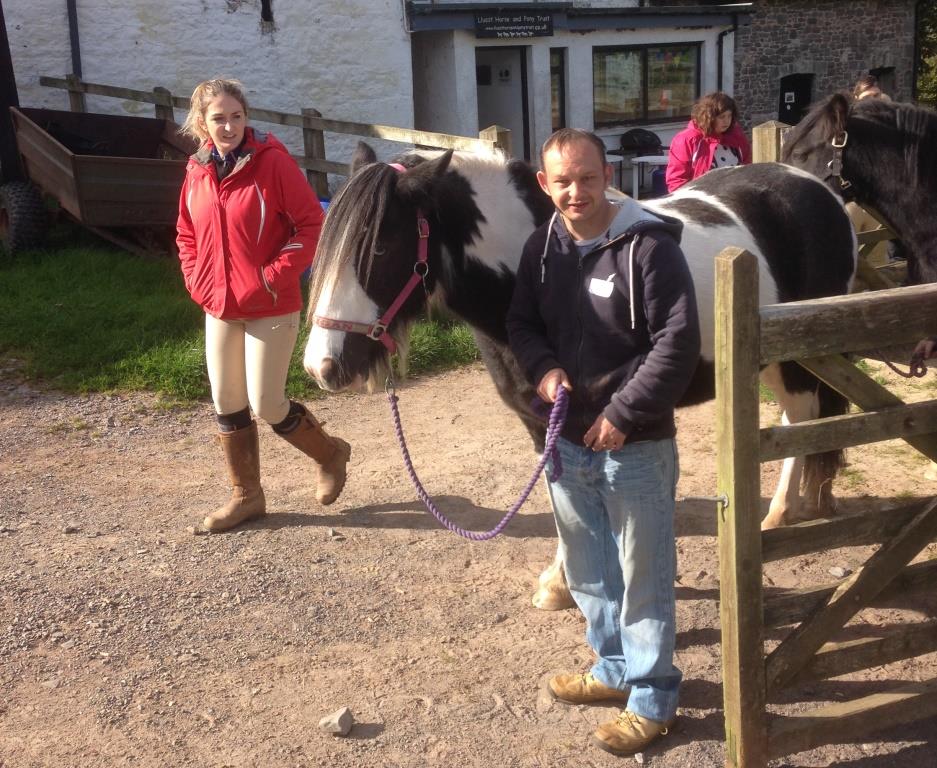
A Horsing Around Project volunteer with a Lluest pony
Previous posts on this blog have featured some of the innovative projects run by West Wales Action for Mental Health, including Tonic – surfing for mental health and Spirituality and Recovery in mental health.

This week our guest author is Marie Rocke, a Mental Health Development Worker at WWAMH. Recently Marie has been working very closely with an animal charity in the Brecon Beacons in Carmarthenshire called Lluest (“Haven” in Welsh). Lluest set up the Horsing Around Project with funding from the Big Lottery Fund and support from WWAMH. Marie tells us more about the project.


It is a well-known fact that Animal Assisted Therapy can support many people to gain confidence, become more self aware and to generally get more out of life. This kind of therapy, especially Equine Therapy, has proven its success repeatedly in supporting individuals on the road to Recovery.

Lluest Horse and Pony Trust, in collaboration with WWAMH, is offering 'Lluest’s Horsing Around Project' to provide Equine based learning for individuals living with mental health problems in Carmarthenshire. The courses are free for participants, and travel costs are covered by the project which is fully funded by the Big Lottery Fund. This is a pilot project incorporating training of staff from both organisations to allow them to collaboratively run future courses over the next few years to create a legacy.

The courses consist of horse care, so participants learn about grooming and mucking out and progress onto horse-watching to learn about body language and horse communication. There is then the opportunity to play games with the ponies, to improve the confidence of the attendee. Games include navigating around an obstacle course within the manège (the enclosed area where horses are trained) and end with games at liberty with the ponies. There is no riding at any point. The courses have been running very successfully for the past 12 months. The last day will run in March and is fully booked. Participants were accompanied by their Occupational Therapists or Community Psychiatrist Nurses in some cases.

Lluest is experienced in providing sessions on Horse and Pony Care and has been doing so for around three years. The staff are trained and well versed and many a young person has learnt what it really entails to keep a horse or pony – before they buy or loan an animal. This is all part of Lluest’s education drive to prevent horses and ponies being abandoned or neglected. We are hopeful that this work will continue at Lluest for the benefit of the attendees and the horses that they support.

What the WWAMH Director and Development Worker say

Lluest staff have had great success in providing training for individuals who wish to know more about Horse and Pony Care. They now wish to extend and offer this course to those individuals living with mental health problems who would normally not find this kind of training accessible for a number of reasons, be that confidence, finances or transport.

Many individuals living with mental health conditions find it hard to attend new and unfamiliar groups unless these are recommended by a trusted advisory service. Also, social isolation, lack of confidence and low self-esteem all inhibit these individuals from gaining valuable experiences, training and positive collaborations which would assist them in reaching their own personal goals.

Lluest wishes to overcome these barriers and believes that by working in collaboration with the West Wales Action for Mental Health, and by having access to the wide variety of groups currently supporting those with mental health problems, that these courses and educational horse and pony experiences, can be widely available to those who may benefit from them the most.

We are proud to be working with Lluest and hope to run many more courses collaboratively in the future.

Angie Darlington - Director of WWAMH

Marie Rocke - Mental Health Development Worker

If you require further information, or live in Carmarthenshire and wish to attend a Horsing Around Day, please contact Lluest on 01550 740661.


And if you live in Powys – do you think a similar project would work well here? Let us know in the comments box below.

Thursday, 29 October 2015

Spirituality and Recovery in Mental Health

Last Monday Tim Teeling, the Pembrokeshire Mental Health Development Officer at West Wales Action for Mental Health, travelled up to Mid Wales to join us for our regular monthly team meeting. We had invited him to talk to us about an innovative project he set up for WWAMH on Spirituality and Recovery in Mental Health. 

Our team had made a trip down to Carmarthen and WWAMH HQ earlier this year to find out more about the organisation’s work generally. 

We discovered TONIC for surfing, watched the Recovery Wall Project and heard a veteran’s story, but the day just raced by – they have so much exciting stuff going on down there! And we ran right out of time to pick up more than a passing hint at Tim’s work. 

It was enough to whet our appetite to find out more, however, and so here is a taste of what we enjoyed on Monday.

Beginnings

Tim was originally inspired to set up the Spirituality project for WWAMH about four years ago when he became aware that whilst much had been written on the topic, very little was available about how to work with spirituality as part of an individual’s recovery. Tim did not want to set up a project that looked at faiths in particular, but rather at “how my feelings and thoughts can help me recover from mental health problems. Instead of seeing our beliefs as signs of illness, we explore them as strengths in recovery.”

Whilst the statutory mental health sector concentrates on reducing symptoms such as hallucinations, the spiritual approach focuses on hope and optimism. There is a shift away from problems to look at a person’s strengths.

What the project does

Three monthly groups, which are open to individuals and their carers, run in Aberaeron, Haverfordwest and Llanelli. After initially experimenting with standalone groups, Tim now works closely with pre-existing organisations such as Mind which has proved more successful.

At the start of each meeting Tim introduces a theme, such as joy, courage, or forgiveness, and following a brief introduction participants then discuss. Revealing our attitudes to our own spirituality could potentially be awkward in a group setting, but ground rules such as “respect for each other” and “no preaching allowed” ensure confidence and enthusiasm to talk. The project is non-denominational and a belief in God is not necessary.

Knowing our own Minds – the starting point

In 1997 the Mental Health Foundation carried out a survey which revealed that 50% of people in contact with mental health services relied on spiritual and religious feelings to help their recovery. This is not that surprising as 60 – 70% of people believed in “something”, even though church attendance was down to 5%. Tim has worked in mental health for 27 years now and is always aware of the importance of spirituality or the non-material aspects of life for many people, particularly in relation to recovery. “It gives a meaning and purpose to life, an optimism, and a much-needed connection to others and the outside world.”


Tim Teeling meets our mental health team
L:R Jackie Newey (Info Service), Jane Cooke (Senior Officer), Anne Woods (Participation Officer)

Spirituality and themes in spiritual therapy

One of the criticisms that people in contact with mental health services sometimes make is that those delivering these services don’t understand them or what makes them tick. “The big question is – what is the most important thing for you in your life? What brings hope and purpose into your life?” The values of peace, compassion and happiness – the sense of the inner self, and the search for a meaning and purpose in life, these themes are rarely explored in any depth. Even more radical, perhaps, is the possibility that problems could be viewed as opportunities for growth.

Spiritual practices and assets

Engaging with our spiritual side does not necessarily mean (although it might – it so much depends on the individual) praying, reading scripture or taking part in a particular faith’s rituals. It could be as simple as enjoying nature, cooking, or helping others. “One guy just loves fishing down by the river. That is his spiritual practice – standing in the river and listening to the birds – not how many fish he catches”.

Once they engage with their spiritual side people start to realise that life is “not just about me – I am part of a greater whole. It gives the courage and grounding that people need, and hope in the face of distress”.

Spirituality and religion

The difference between spirituality and religion is a subject often discussed. Tim said that spirituality is usually something we do on our own and covers beliefs and practices found outside organised religion. Religion, meanwhile, whilst intrinsically spiritual, tends to be organised and communal.

Research

There is a wealth of research in the area, and evidence shows a statistically significant relationship between those who engage in spiritual practices and greater life satisfaction, including: an increase in hope and optimism, a sense of purpose and well meaning, increased self esteem, less depression, fewer suicides, less substance abuse, and less psychosis and psychotic tendencies.

Of course, negative experiences are also possible – people may feel persecuted by spirits or punished by an intolerant deity, and it would be unwise to suggest someone cut out all their medication in favour of prayer, for example.

Mental health assessments and spirituality

A particularly interesting part of Tim’s talk related to the way in which mental health nurses struggle to explore an individual’s spiritual life with them, in care and treatment planning for example. The Mental Health (Wales) Measure 2010 acknowledges the importance of spirituality in its Code of Practice:

“Spirituality can play an important role in helping people live with, or recover from, mental health problems. Spirituality is often seen as a broader concept than simply religion”.

But for the nurses it is often an awkward area to discuss. Where do they start? What questions can they ask? They may be fearful about stepping on sensibilities, but actually exploring spiritual issues with someone can be therapeutic in itself. In Tim’s workshops he looks at ways this can be done, using practical exercises and prompting questions such as:
  • Are you spiritual and religious in any way?
  • What do you really value in your life?
  • What keeps you going when things get tough?
  • Has being ill affected your thoughts about the future?
Once a conversation has been started, and if an individual is keen to pursue the subject, further questions can be asked about specific scenarios. Nurses could find out more about someone’s experience of talking to GPs, psychiatrists and nurses about their spirituality. And ask if they are worried about any conflicts between their beliefs and their care. At his sessions Tim talks through the specific skills which aid such conversations. These include attentive listening, suspending your own judgment, and accepting that spiritual pain may not be solved as a problem, but as a question to be lived.

So far Tim has met with two groups of nurses in Pembrokeshire – a Community Mental Health Team and staff on an inpatient ward. He has a third session coming up soon. It sounded to the rest of us as if his session on spirituality would be invaluable for all those working in the field of mental health!

Tim ended his talk by reminding us that “our health services are very much involved in symptom relief. Recovery is about living with hope, even with our problems.”

Thanks so much to Tim for telling us about the Spirituality and Recovery Project run by WWAMH in West Wales. What are your thoughts on spirituality and mental health? We’d love to hear from you. Let us know in the comments box below.

You can watch a video in which Tim talks about the project at the 2014 Annual International Think Tank Conference.

If you are interested in finding out more about the project please contact Tim Teeling by emailing tim@wwamh.org.uk

Read about other research on spirituality and mental health:

Taken seriously: Somerset spirituality Project 2002

The impact of spirituality on mental health 2006

Monday, 27 April 2015

Tonic: surfing for mental health


Every now and again in our team we are lucky enough to meet up with our counterparts in other parts of Wales. Two weeks ago we travelled down to Carmarthen to the office of West Wales Action for Mental Health. We spent an enjoyable and extremely interesting day finding out about the many diverse and innovative projects the staff and volunteers are currently working on. Check out The Recovery Wall project on the organisation’s website, which is using digital media to promote recovery and wellbeing, and Mind Your Heart – a health promotion programme for people living with mental health problems…. not to mention the excellent work with veterans over the past couple of years, which should probably have a separate blog post all of its own – just keep watching this space!

And then there is Tonic – the surfing therapy project…. 
Shôn Devey, the Development Worker leading on Tonic, told us more. He started from a very personal viewpoint.

Ton is Welsh for wave. Staff here realised that they had this fantastic natural environment on their doorstep. Who doesn’t feel better when they go to the beach? Yet some people who live near a beach never go. I ride the waves for my own mental health and wellbeing. It was like a dream come true when Angie Darlington (the WWAMH director) asked me to develop this project.


Tonic was set up 4 years ago. People spend so much time in hideous rooms for their therapy sessions. We thought maybe they’d feel better for being in this great outdoor space. Add an activity as well and you have the extra health benefits of that. Put people into groups – and then you have social interaction. Isolation is a big problem for people locally.


At first people think – “I don’t think I can do this”. It’s a metaphor for other areas of their lives. But engaging with surfers is actually a cool activity. The moment participants enter the water they’re connected with the world’s oceans. It is like putting on a new skin (literally – in the form of a wetsuit). People are suddenly all equal – the teachers, volunteers, participants. We connect with marine mammals - there have been dolphins circling us in the water. Afterwards we’ve had participants volunteering to clean up the beach and engaging with the wider world. 

The programme is open to anyone with mental health problems, a carer of any kind, veterans, and those who’ve experience of substance misuse or alcohol addiction. The current age range is 11 – 72. We have a 72 year old woman who surfs through the winter along with a group of other women. They find that being tumbled and battered in the waves is good for their wellbeing. It’s a really constructive activity for carers and the cared for to take part in together. Children will come along with their parents because it’s “cool!”


All the kit is provided for the 6 week long programme which works out of beaches at Borth, Poppit and Newgale. Participants spend 2 hours in the water, with an hour preparing. So it’s an afternoon each week. Then afterwards we socialise together. We use a lot of volunteers in the water and have developed rigorous health and safety procedures. Volunteers help participants to see their success. Everyone has lots of fun. At the end of each course we have a BBQ and celebration.

People are “wide open” straight after the surfing session so there is a period when it is possible to work on things. We have links to surf therapy projects around the World. In South Africa, working with young people from the townships, after the surfing they run beach school and hold HIV/sexual health sessions. Ultimately we would like to offer a menu of options around engaging with the ocean environment, such as dolphin watching, footpath maintenance and beach clearing. 

This is our fourth season, and there has been a development pathway through the programme. Some participants go on to become project volunteers and then surf instructors. We have trained 12 instructors so far. But the project is not so much about the surfing as about spending time with people in the natural environment. And giving good care and attention to people is key.

It’s also important to help keep people in the water after the programme has finished. One of the volunteer surf teachers runs a Saturday club through the winter which anyone can join. And there is a virtual surf club on Facebook. We are also hoping to develop a physical space at Borth – more information coming soon!

WWAMH is working with Swansea University to evaluate the project. So far across a small sample of people it has been shown to have a significant effect upon people’s mental and physical wellbeing, to the extent that it sits alongside medication as a valid option. Some participants come off a hospital ward, they may be “zombied”, or over-medicated – and then they “wake up” with the first woosh of a wave. It is absolutely incredible. People talk about their new “healthy” addiction.

After tumbling in the waves one of the participants said: “I was brainwashed! I came and my mind was all crumpled and full of anxiety. It was as though someone took my brain out, cleaned it and put it back in my head.”

Tonic has been highly commended in the NHS Awards and is now beginning to be accepted as mainstream, with a 2 year service level agreement being set up with the Child & Adolescent Mental Health Service (CAMHS) team. The project is also in the process of being established as an independent charity with a board of trustees. Future development opportunities include weekend packages for groups – a sort of mental health tourism. Suddenly people really want to be a part of it!

Powys meets West Wales!

Back row: WWAMH - Lewis Phillips - IT Officer, Shon Devey & Charles Macmillan - Development Officers. 

Our team - Freda Lacey (Participation Officer), Jane Cooke (Interim Senior Officer Mental Health), Jackie Newey (Projects Officer) & Glynis Luke (Admin, Information & Communications Officer).
Front row: WWAMH - Marie Wright & Tim Teeling - Development Officers, Angie Darlington - Director, 
Jan Batty - Mind Your Heart programme Development Officer.


Shôn’s enthusiasm for the project is infectious. We all agreed it is an absolutely brilliant project, and wish we had the seaside here in Powys (though Borth is not that far away for some of us)! What kind of physical activity project would you be interested in here? Let us know.

Tuesday, 7 April 2015

Mental Health & Missing Person Support Officer - Dyfed-Powys Police

Carina Giannuzzi is the Mental Health & Missing Person Support Officer for Dyfed-Powys Police. 

We recently worked with Carina, and colleagues at West Wales Action for Mental Health, to produce some mental health information cards for use by police officers who come into contact with people experiencing mental distress.

We caught up with Carina recently to find out more about this project and other vital work she is doing in Powys and Ceredigion.


Tell us more about the work you do

I started in my current role as Dyfed-Powys Police’s Mental Health & Missing Person Support Officer on the 1st September 2014, and from the start have been involved in two major projects which are ongoing.

One is the Mental Health Triage Team run in conjunction with Hywel Dda University Health Board and although the project does not cover the county of Powys, it does cover Ceredigion, Pembrokeshire and Carmarthenshire. The other is the Time to Change Wales anti-stigma campaign to tackle the discrimination surrounding mental health where I assisted Hywel Dda with a week of events they held last October.

I am a member of various mental health related groups, both internally and externally, and attend regular meetings relative to these.

I am also responsible for collating data and providing reports; receiving and identifying areas of work that require improvement to deliver change and am involved in multi-agency and partnership working.

What led you to this particular role in the police?

When I read the role profile for the post it sounded so interesting, worthwhile and rewarding that I thought “I want that job!” and thankfully I was successful in my application.

I also have a personal interest in mental health which I feel benefits that side of the role due to my understanding the impact that mental ill health can have on individuals, their family, friends, colleagues and employers.

What is the most challenging aspect of the job?

I would say juggling the two sides of the role as both aspects are equally important and demanding areas of work.

Are there particular issues which arise in rural areas for people experiencing mental distress?

Isolation is probably one of the biggest factors. Many people living in rural areas reside in remote locations and will not have neighbours close by that they can call upon. Their family and friends may not live close by and transport to visit them or just a trip to the shops can cause issues for some people, especially the elderly. Regular contact and communication is key for these people.

Why do you think the police are often the first point of contact for people experiencing mental distress?

When a person is in distress or at crisis point they want immediate assistance. They may not know who else to contact for help and by telephoning the police they know that they will get a response 24 hours a day. Many services are not available out of hours and this is another reason police are contacted.

What is the biggest issue for police officers trying to support people in the community who are mentally distressed?

Accessing the necessary services to provide them care and assistance they require in a timely manner. This is particularly prevalent ‘out of hours’.

Dyfed-Powys Police are working hard to provide better support for people in mental distress (see here for example). Tell us about the latest initiatives and any feedback you have had.

Our Chief Constable Mr Simon Prince has just signed an organisational pledge on behalf of Dyfed-Powys Police to show our commitment to the Time to Change Wales campaign to tackle the stigma and discrimination surrounding mental health. I will be putting plans in place to take this campaign forward.

We are also looking at a safety card for people with mental health, learning disabilities/difficulties and dementia who may come in to contact with the police for any reason, for example, if the person is in crisis, lost or wishes to report a crime. The card will provide the officer with their name and details of their condition. It will also provide the name and details of a person police can contact to assist them dealing with the individual they have come in to contact with. This will be of benefit to both the individual and the officer. Once the design and content have been agreed, we hope to have this in place in the next few months.

Dyfed-Powys Police, in conjunction with Hywel Dda University Health Board, has set up a Mental Health Triage Team to respond to mental health related calls received by police. The scheme commenced at the beginning of January 2015 and initial feedback and statistics are very positive. Although the project has only been running for a few months, it has already been nominated for and NHS award.

How will the mental health information card we worked on together recently help?


The cards will provide an extra 24 hour point of contact for people who do not know where or how to obtain help, with the mental health team at Powys Association of Voluntary Organisations (PAVO) and West Wales Action for Mental Health (WWAMH) providing another line of contact to advise people what is available in their communities. There are so many valuable services in the third sector that people do not know about and it will also help to raise their profiles and that of PAVO and WWAMH.

Which other organisations do you work closely with in Powys and Ceredigion to provide support to people?

Powys Teaching Health Board is the main organisation. I have recently met with HUTS (Help Us To Survive), Hafal and Noddfa at a Ceredigion Voluntary Group meeting and am hoping to work more closely with all three of them in the near future.

Where do you think the 3rd Sector fit into the picture? Would officers be confident about signposting or referring people to voluntary organisations?

The third sector can and does play a major part in mental health. There is wealth of fantastic work going on that people are not aware of that is assisting so many individuals and their families. Our Triage Team officers and Force Communication Centre staff are already signposting and referring people to voluntary organisations. It is a matter of making our staff aware of what is available throughout the Force area and what services these organisations offer. One of the ways this is being done is by adding these organisations to our internal Force Mental Health Information Page. Many have already been added and as I come across new ones, they are being added to the site.

Is there anything more the 3rd Sector could do to support the police in their work with people experiencing mental distress?

I believe the third sector is already supporting police in their work.

The only suggestion I have that may be useful in raising the profile of voluntary organisations within the police (if not already being done) would be for them to invite local Neighbourhood Policing Teams along to meetings or events they are holding.

What is the most valuable thing you have learnt since starting your role?

I am finding this very difficult to answer! I have learned a great deal, particularly in relation to the third sector and the fantastic work they do. I had no idea until I started in this role and I find it very inspiring.

When you are not working for Dyfed-Powys Police, how do you enjoy spending your time?

I have a wonderful family and friends who I love to spend time with.

I love to read books of all sorts and am keen on history, fashion and art. I also like to sew when I have the time and have just started exercising again to try and gain some level of fitness once more (said through gritted teeth)!

Many thanks to Carina for telling us more about her work. If you have any queries or comments we would love to hear from you.