Showing posts with label computerised CBT. Show all posts

Thursday, 24 November 2022

Online therapy service supporting young minds


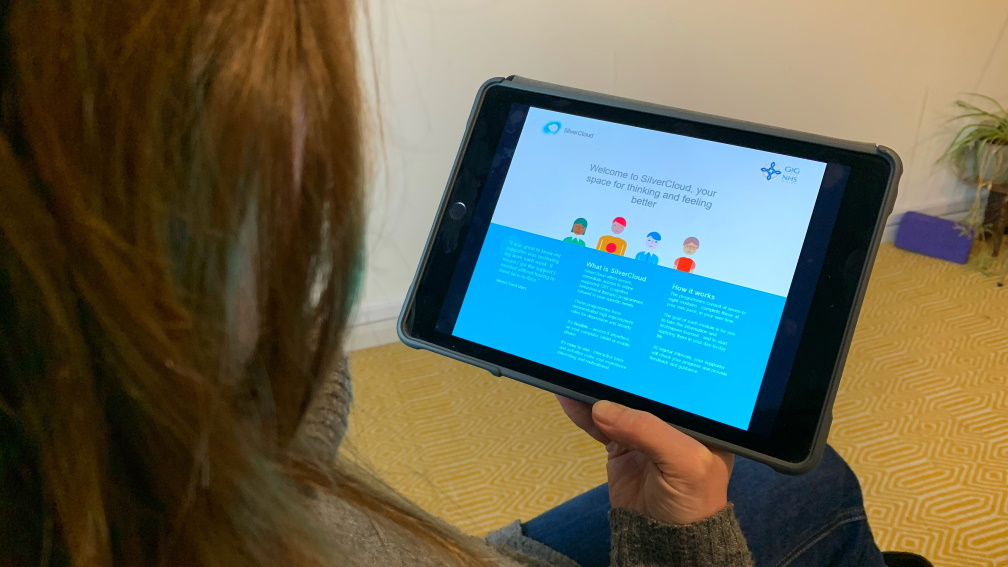
In October 2022, the SilverCloud online Cognitive Behavioural Therapy (CBT) service opened its virtual doors to help children, young people and parents across Wales manage their mental wellbeing. The SilverCloud team explains how to access the service in Powys and offers some tips to support the young people in your life.


Home schooling and pandemic lockdowns may seem like a distant memory now that we’ve (largely) returned to “normal“, yet the challenges of the past few years are having a lasting impact on our younger generation.

According to research by NHS Digital, 1 in 6 children and young people had a diagnosable mental health condition in 2021, such as anxiety or low mood. This is up from 1 in 9 in 2017.

Early intervention and support can help young people build the emotional skills that are vital for learning, life and good mental health in future.

SilverCloud has supported over 33,000 people in Wales since launching its self-referral programmes for adults in September 2020. Following a successful pilot in Powys this year, young people throughout Wales, and their parents/carers, can now access a suite of CBT-based online support programmes to help with mild-to-moderate anxiety and low mood.
  • Parents and carers can sign up for a free 12-week online therapy programme for help in supporting children and young people aged 4-18 with mild-to-moderate anxiety.
  • Teens aged 16-18 throughout Wales can sign up to our self-referral service directly via their mobile, tablet or laptop - without needing adult consent - for support with mild-to-moderate anxiety or low mood.
  • Young people aged 11+ in Powys can be referred into SilverCloud by Powys Teaching Health Board Child and Adolescent Mental Health Service (CAMHS), Powys County Council Education, Youth Service, Youth Intervention Service, Youth Justice and Early Help.
Making the service available to children, young people and their parents/ carers enables thousands more people to get early access to support when they need it.

Psychological Assistant and Clinical Online CBT Coordinator, Jess Ferdinando, explains how SilverCloud can help:

“The past couple of years have been particularly difficult for children and their families. As well as navigating the usual stresses of growing up, young people are still living with the impacts of a global health crisis.

“Supporting children and young people who are struggling with their mental health can be challenging. SilverCloud offers practical, clinically proven help for young people to manage anxiety and low mood as well as help for parents/carers in supporting them.

“Our pilot of the children’s and young person’s service has already had a positive impact in Powys, so I’m thrilled we’ve been able to extend this support to young people and their families throughout Wales.

“All our programmes are packed with useful insights, practical tools and activities to empower young people to manage their problems and apply what they learn in their daily lives.

“It’s supportive, too! We like to call it online therapy with a human touch because every client is assigned a SilverCloud supporter; this is an online CBT coordinator who guides the client through the programme and provides regular personalised feedback.

“One of the great things about SilverCloud is its flexibility; you can access the therapy programmes from any online device and work through them at your own pace, which makes it easier to fit around your life. For the best results, we recommend that people access their SilverCloud programme 3-4 times each week for 15-20 minutes each time.”

Tips for Parents Supporting a Child with Anxiety


“If your child or teen is experiencing anxiety,” continues Jess, “there’s lots you can do as a parent or carer to help them. This includes taking care yourself too! I’ve put together a few tips for parents and carers:
  1. Keep your cool. Seeing your child in distress can be upsetting. You could feel a range of emotions including sadness, frustration and even anger over what your child is going through. These are all normal responses to a challenging situation. You’re in a much better position to make sensible parenting decisions when you’re calm, as opposed to reacting emotionally.
  2. Remember to take time out for yourself to relax. Have you heard the phrase “you can’t pour from an empty cup”? It means that for us to take care of others, we also need to take care of ourselves. This is especially important if you’re helping a child who is struggling with their mental health. If you can, take some time out to do something you enjoy.
  3. Listen to your child. You may instinctively want to take action to fix whatever is causing your child to feel anxious. Sometimes, you don’t need to have the answers or fix it; take time to listen to your child and understand the situation. You child is more likely to confide in you if they feel seen and heard and know you will listen to them without judgement or criticism.
  4. Find support for yourself from professionals and other trusted adults. As a parent or carer, it’s natural to want to support your child during difficult times. Remember that you need support too. You don’t have to go it alone; reach out to trusted friends, family members or healthcare professionals if you’re struggling.
  5. Work together as a team – you’re stronger together!”


What programmes are available?


SilverCloud programmes are based on Cognitive Behavioural Therapy (CBT), an evidence-based therapy that works by encouraging young people to challenge the way they think and behave to become better equipped to deal with life’s challenges.

There are five specially designed Children & Young People (CYP) programmes available on SilverCloud; three for young people and two for parents:
  • Space from Anxiety can help young people understand their anxiety and learn skills to help them cope better.
  • Space from Low Mood can help young people to understand and manage symptoms of low mood.
  • Space from Anxiety and Low Mood can help young people understand and manage symptoms of anxiety and low mood.
  • Supporting an Anxious Child helps parents and carers of children aged 4-11 in understanding and managing their anxiety.
  • Supporting an Anxious Teen helps parents and carers of young people aged 12-18 in understanding and managing their anxiety.


How to access help for young people in Powys

People in Powys have two ways to access SilverCloud’s tailored support programmes for children, young people and parents.

1. Self-Referral – available throughout Wales

Anyone aged 16+ can sign up to a SilverCloud programme online via our self-referral service; this means you can sign-up directly without needing to be referred by a GP or healthcare professional.

Choose one of the easy-to-use, interactive online mental health and wellbeing programmes to complete over 12 weeks and receive fortnightly feedback from your online SilverCloud Supporter, one of the mental health professionals whose role is to support users of the service.

All of our adult programmes are open to individuals over 16; we recommend that young people aged 16-18 choose one of our CYP programmes which have been developed with young people in mind. Young people aged 16+ can sign up to a SilverCloud programme independently of a parent.
  • Space From Anxiety (CYP) – for young people aged 16-18.
  • Space From Low Mood (CYP) – for young people aged 16-18.
  • Space From Anxiety and Low Mood (CYP) – for young people aged 16-18.
  • Supporting an Anxious Child (parents/carers of children aged 4-11).
  • Supporting an Anxious Teen (parents/carers of young people aged 12-18).


2. Referred service (Powys residents only)

In Powys, young people aged 11+ have unique access to our CYP programmes through our referred service. Access to these programmes is only available to young people below the age of 16 following a referral to SilverCloud by one of the following teams:
  • PTHB Child and Adolescent Mental Health Service (CAMHS);
  • PCC Education, Youth Service, Youth Intervention Service, Youth Justice, Early Help.
Programmes available through our referred service:
  • Space From Anxiety (CYP) – for young people aged 11-18.
  • Space From Low Mood (CYP) – for young people aged 11-18.
  • Space From Anxiety and Low Mood (CYP) – for young people aged 11-18.
  • Supporting an Anxious Child (parents/carers of children aged 4-11).
  • Supporting an Anxious Teen (parents/carers of young people aged 12-18.


Want to know more about SilverCloud in Wales and online CBT?

If you have any queries, please email Silver.Cloud@Wales.nhs.uk


Follow us on Twitter: https://twitter.com/SilvercloudW

Thursday, 22 October 2020

Online therapy service to help with winter blues

by guest author Carol Brown
SilverCloud Project Manager, Powys Teaching Health Board

Every October, the days get shorter, the nights longer, and there’s a rise in demand for mental health services. But the SilverCloud Online Cognitive Behavioural Therapy (CBT) service remains open for business.

Powys residents have unique access to the SilverCloud Blended Online CBT service, which offers people aged 16+, who are experiencing mild to moderate anxiety, depression or stress, a 12-week course of online therapy via their smartphone, tablet, laptop or desktop computer, plus six sessions with an Online CBT practitioner.

Pre-Covid, the six sessions with an Online CBT practitioner took place face-to-face at GP surgeries in Powys, now they take place over the phone and by email.

The Online CBT practitioners review users’ progress on SilverCloud, signpost activities and tools available on the online therapy system, and offer encouragement and support.

The SilverCloud Blended Online CBT service is run by Powys Teaching Health Board in partnership with Ponthafren Association in North Powys, Mid and North Powys MindBrecon Mind and 
Ystradgynlais Mind.

Anthea Jones, Mid & North Powys Mind

Anthea Jones from Mid & North Powys Mind tells us how they've adapted their service from in-person to online and how social media has helped them engage with people. 

“The winter blues is a phenomenon. There is always an increase in admissions to mental health services when the clocks go back. It really does help to make sure you get outside and get as much daylight as possible in autumn and winter. Think of it as self-care. It keeps your mood up having the light. 

“As soon as Covid hit, we moved from meeting clients face-to-face in the GP surgery to supporting people over the phone and by email.

“We also widened the referral process so that as well as GPs, other healthcare and mental health professionals can refer people to us. 

“At Mid and North Powys Mind, we responded to a demand in lockdown by recording and sharing videos to our Facebook page to support people with their mental health and wellbeing.

“We’ve made videos explaining SilverCloud and the different tools and activities it features such as how CBT can help with anxiety, the link between food and mood, gratitude, mindfulness, Tai Chi, and the importance of getting out in nature to keep your mood up. There’s lots on our Facebook page.

“The response has been really positive. We get feedback from people saying ‘thanks’ and ‘that’s really helped me’ which is good to hear. Our viewing figures are up to 2,000 per broadcast and that’s spurred us on to keep going.

Tackling overthinking

“One of the common things I’ve found with people who use the SilverCloud Blended Online CBT service is the overthinking. It’s like everyone’s living a second life in their head, thinking about things too much, dwelling on things, especially with the uncertainty that Covid has brought to our lives.

“To help with this, I walk clients through the Thoughts, Feelings, Behaviours cycle, which shows you how what you think affects how you feel and how you behave. This is explained on SilverCloud.

“Keeping a thought diary can help get thoughts out of your head and help you see patterns that you can learn from, such as thoughts that come up every day and thoughts you might need to look at more deeply.

“On a practical level, positive self-talk can help. So ‘I can’t do anything right’ becomes ‘I can do better next time’, for example. Upping your activity levels is also key. Break up the time you spend sitting and thinking and get up and out, using your hands and feet and losing yourself in physical activity. Being active can make such a difference.


How does SilverCloud Blended Online CBT work?

“When people are first referred to SilverCloud Blended Online CBT we’ll have an hour for our first session together where I help them get set up, walk them through how to use it and get the most out of it.

“The amount of time people spend using SilverCloud is flexible, because users can log-in and work through the programme in a way that fits into their lifestyles. Ideally, people log-in for around 15 minutes every day to work their way through the activities and tasks that make up their programme and they’ll complete a fortnightly review online.

“I’ll have a look at their results and use the five follow-up sessions, which are around 20 minutes each, to give them a call – or email if they prefer – to discuss their progress, give feedback and offer support. 

Who do you work with?

“I work with a real range of people on the SilverCloud Blended Online CBT service, aged 16 to 80.

“I have been working with a lady in her seventies who’s been really great with it. She’s put a lot of effort into using SilverCloud and we’ve built up a really good rapport over the 12-week programme and her mental health and wellbeing scores have vastly improved.

“Then, the fact that it’s an online programme naturally attracts younger people, men especially, who like that they can work on their mental health and wellbeing in private, so to speak, without everyone knowing about it.

“For example, I started working with a student in his early twenties during lockdown who was struggling with anxiety. He didn’t feel able to talk about this with family and friends but he started using SilverCloud and likes the conversations we have around it.

“I find the service is also popular with men in their early thirties. Again, anxiety is a common issue and being able to do the programme online with the support from an Online CBT practitioner like myself means the blended approach really works for them.

“SilverCloud gives people the chance to lead a ‘normal’ life but with backup support. Plus, being an online service, it fits around working life and I think because of lockdown, more people are looking for online solutions.

“Now, because of Covid, they don’t have to take the afternoon off for a face-to-face appointment with me at the GP surgery. They know we’ll check in with them over the phone or by email. And an online service is useful for people in rural areas like Powys where the geography can pose a challenge to accessing health services at the best of times. 


Anxiety is a common issue

“Users can choose from a range of mental health and wellbeing programmes to complete at their own pace over 12 weeks. Programme options include help with anxiety, depression, stress, sleep, and money worries.

“The programmes that help with anxiety are most popular with people I work with. I’m keen to point people towards the resilience programme as it can really help with thoughts about going into lockdown again and being down about life.”
  • Mid and North Powys Mind Facebook You can view their mental health and wellbeing videos on www.facebook.com/mnpowysmind/
  • SilverCloud Blended Online CBT service available in Powys. If you are interested in signing up for this combination of online CBT with phone call and email support sessions with an Online CBT practitioner, please contact Ponthafren Association in North PowysMid and North Powys Mind, Brecon Mind or Ystradgynlais Mind. Alternatively, please email Silver.Cloud@Wales.nhs.uk with the subject line ‘SilverCloud Blended Online CBT service’ or call 01874 712 428.
  • SilverCloud Self-Referral available across Wales If you’re aged 16+ you can now sign up directly for SilverCloud Online CBT without needing to go through your GP or other healthcare professional. Although an online self-help service, you will be allocated an Online CBT co-ordinator who will liaise with you via the SilverCloud platform in order to guide you through the programme and monitor your progress.


Monday, 5 August 2019

The latest on SilverCloud - online Cognitive Behavioural Therapy

Becka Williams, Project Manager and Catrin Guest, Project Support Office & Online CBT Coordinator
by guest author Becka Williams
Project Manager, Powys Teaching Health Board

Following the implementation of our Online CBT service, SilverCloud, across Powys in May 2018, there has been a lot of work undertaken to develop the service and upscale it across Powys. 

We have received approximately 1100 referrals into the stand-alone service with referrals beings received from a range of different departments, services and healthcare professionals across the Health Board.

Work has commenced on the translation of the main Space from Anxiety and Depression programme and it is hoped that this will be ready for implementation by the end of 2019.

We were fortunate to win the Powys Teaching Health Board's Staff Excellence Award under the category of ‘Digital First’ in July which is a fantastic achievement. 


Becka Williams  Project Manager, Claire Cartwright – Director Ponthafren Association,
Jackie Jones & Sarah Dowler – Blended Online CBT Practitioners, Ponthafren

Blended Online CBT Service


We have implemented our Blended Online CBT service in partnership with Ponthafren Association in North Powys and the Mind Resource Centres in Mid and South Powys. The blended service offers access to the online platform as well as 6 face to face sessions with our Blended Online CBT Practitioners, during which they will review progress of the platform, signpost certain activities, tools and modules within the programmes and offer encouragement and support. The face to face sessions will be offered from the GP practices in Powys.

We are now ‘live’ with this service across nearly all GP practices, and where we have been unable to offer this from the specific practice, an alternative can be offered for the service users in that area should they wish to access this service.

Clinical referrals are required in to the blended service and these can currently be done through GPs of the Local Primary Mental Health Support Services (LPMHSS) within Powys Teaching Health Board.

We have currently received approximately 190 referrals into this service and are continuing to engage with the GPs and clinical teams to further upscale the blended approach.

Becka Williams, Project Manager & Catrin Guest, Project Support Office & Online CBT Coordinator raising awareness of Positive Body Image with PTHB's Occupational Health & Mental Health department during Mental Health Awareness Week

Positive Body Image

As part of Mental Health Awareness week, with ‘body image’ being the topic for 2019, we implemented our Space for Positive Body Image programme, which is now available for our healthcare professionals to refer in to.

This programme looks at the following topics:

  • Improves understanding of body image and the impact on depression and anxiety.
  • Focuses on what factors influence body image and how to improve perceptions of body image. 
  • Introduces the known risk factors of eating disorders.
  • Improves understanding of the effect of the media on understanding of the “ideal body”.
  • Encourages reduction of individuals thin-ideal internalisation through analysis of media messages.
  • Introduces self-esteem and focuses on where it comes from and how to boost it.
  • Introduces the reciprocal relationship between how we feel and how we eat, using the CBT model of Thoughts Feelings Behaviours (TFB) cycle.
  • Recognises emotional eating, mindful eating and how to have a healthy relationship with food.
  • Recognises negative automatic thoughts and how to challenge them.
  • Introduction to Mindfulness.
  • Self-esteem enhancement through activities.
  • Recognises the importance of social support in staying well.

Self-referral

We have designed, developed and recently implemented a self-referral option to this service. This service is available for all Powys residents and Powys patients that would like to self-refer onto an Online CBT Programme for depression, anxiety or stress. This service aims to offer services to those experiencing symptoms of depression, anxiety or stress who want access to an effective Online CBT therapy without having to first have an appointment with their local GP or other health professional.

People will be required to undertake an initial self-assessment and on successful completion of the self-assessment, immediate access to the online programme will be given. However, if the self-assessment results are not within the appropriate threshold for this service, a clinician from the PTHB Online CBT team will contact the person in due course for a follow up phone call assessment to determine whether the service is suitable for that person.

Sign up to the self-referral service here.

Student Programmes

The referral age for this service has now been lowered and therefore we are now accepting referrals for young people aged 16 years and above.

We have also implemented ‘student’ versions of 3 of our programmes: Space from stress, Space from anxiety and Space from depression which all offer support that relates more specifically to students such as educational stresses, friendships, relationships etc.

We have started to engage with the high schools and colleges across Powys to increase awareness of this availability to students.

Fionnuala Clayton, Psychological Assistant & Online CBT Coordinator & Catrin Guest, Project Support Office
& Online CBT Coordinator

All-Wales Roll-out


One of the key aims of this project was to explore the opportunity of implementing Online CBT across Wales, including the other Welsh Health Boards and third sector organisations.

Work has commenced on this and we went ‘live’ with the Welsh Ambulance Service NHS Trust (WAST) in December 2018 with this service being utilised within their Occupational Health and Staff Wellbeing teams.

We have also started working with Aneurin Bevan University Health Boards (ABUHB) with this service now being piloted within their Primary Care Mental Health Support Services (PCMHSS) and referrals being received since June 2019.

Engagement is still being undertaken with the other Welsh Health Boards, with a view to further roll-out this service across the different health board areas.


For further information on any aspects of the project or service, please check out this Powys Teaching Health Board website, or contact Becka Williams, Project Manager, on 01874 712 444 or becka.williams@wales.nhs.uk.

Thursday, 1 December 2016

How is telehealth working in Mid Wales?

Clare Clark & Owen Hughes from the Pain & Fatigue Management Service
Over the past few weeks I have attended a number of events where a familiar theme has emerged – the increasing importance of using digital technology to deliver and receive support for people in Powys accessing NHS services, particularly around their mental health. We have already heard the latest about the pilot computerised Cognitive Behavioural Therapy project run by Mastermind in conjunction with Powys Teaching Health Board – so this seemed like a good opportunity to share information about other telehealth initiatives in the county.

On November 10 I attended the Powys Research, Therapies and Health Sciences Conference, where I found out how staff at the Pain & Fatigue Management Centre in Bronllys near Brecon deliver condition management groups by Skype. The team at Bronllys provide help to people who want to live life more fully but are hindered in doing so by symptoms of long term health conditions – these could be conditions relating to physical or mental health or both.

This session was delivered by Owen Hughes, Head of Pain & Fatigue Management, and Clare Clark, Advanced Practitioner – Occupational Therapist – both based in the Pain & Fatigue Management Service in the Centre of Long Term Condition Management. Owen and Clare explained that there is currently a Skype group running from Bronllys, and through their presentation they explored the benefits of working in this way and what to consider when setting up a new Skype group.


Owen started the session by asking why it is important that we consider using software applications such as Skype to have video appointments and group support sessions over the internet. At this point his presentation featured a photograph of a famous actress from the silent movie era – but not a single person in the room recognised her because she had refused to switch to the “talkies” once they came along. (And I’ve forgotten exactly who she was already, though Owen did tell us her name!) The moral from that story being – we must move with the times or be left behind forever…. Owen said “technology is everywhere, and homes are getting smarter.” He asked us to imagine what people’s homes would look like in ten years’ time.

Eleanor Boardman - the forgotten silent movies star...?
How it works

Clare picked up here to detail other issues which affect both patients and the team when trying to engage over a period of time. As we know people living in Powys often have to travel huge distances to see medical professionals even within the county. They may already be anxious and even on a good day people experiencing mental distress may not be ready to take on the long journey, perhaps by public transport, to make an appointment.

Other people may find it inconvenient to take a whole day from work to attend a session every 6 weeks, but would be able to free up an hour in a private room to make the Skype call. The issue of time is a factor for the staff too, who may otherwise have to spend many hours behind the wheel of their cars when they could be talking to more patients. They simply do not have the capacity to deliver all their sessions face-to-face, and Skype has proved an additional extra tool by which they can offer support to people.


Lessons learnt
  • Peer support still works when Skype is used – there is a lot of interaction between the participants on the group sessions.
  • It can be hard to manage group dynamics online – there is no social filter – so if some people are being derogatory this needs to be managed. Now there is a working agreement and boundaries are set at the start.
  • It is important for participants to have a trial one-to-one session at the beginning during a coaching period with a telehealth facilitator, particularly if they are not familiar with the technology. 
  • The maximum number for a group session is probably 8. There were 4 in this group.
  • It should not be forced on people. Generally they self-select.
  • It can be effective for quite complex issues, not just mild anxiety or conditions.
  • It is a transferable skill as it teaches people how to communicate online. It increases their social connectedness.


What people said

"I thought it would encourage isolation – but it made me feel less isolated. If I’m working with levels of anxiety, being at home can be a good place to start".

"I felt it improved my confidence so I was able to go out and socialise".

"I would never have been able to attend a face-to-face session today, but was able to log into the PC and join in".


Then on 22 November I went along to a public session run by the Mid Wales Healthcare Collaborative in Newtown. The MWHC covers North Powys, Ceredigion and South Gwynedd, an area served by three health boards including PTHB, and works with providers and communities “to plan and deliver safe, sustainable, high quality and accessible health and social care services for the population of Mid Wales”. One of its twelve priorities this year (2016 – 17) is to look at Telehealth, Telemedicine and Telecare:

“There should be a coordinated effort by all three Health Boards to identify the opportunities for much greater use of telehealth capacity and a determined drive to hasten its implementation”.

“A 6 month project will be undertaken to ensure that the telemedicine equipment in Mid Wales is working, sited in the best place and that staff are trained to use it”.

At the Newtown session I met Adrian Thomas, Director of Therapies and Health Sciences at Betsi Cadwaladr University Health Board and lead on telehealth for the MWHC, and Emma Pritchard - the Telehealth Project Manager. They described some recent telehealth work developed as a result of this priority which focussed on a teledermatology service in North Ceredigion. We also spoke about other options that could be developed in future, taking into account feedback from the Mastermind Beating the Blues pilot and other initiatives such as those running at the Pain & Fatigue Management Centre. It was emphasized on the table where I was contributing that the telehealth option would not work for everybody - personal choice was key - but it should be offered as an option as it may be preferable for some.

Pages 32 – 38 of the 2016 report “A review of telehealth, telecare and telemedicine in Wales” give some details of recent initiatives in Wales which have used telehealth, including a Veterans’ mental health project in South Wales and the Powys Mastermind project. There are also links to further published research evidence around computerised CBT including that relevant to autism, eating disorders, and veterans.


If you are in contact with mental health services, or have been in the past, have you tried the telehealth option? What was your experience? If not, would you like to try it, particularly if it meant you were able to receive support sooner? Let us know in the comments box below.

Monday, 25 April 2016

The latest on MasterMind - computerised CBT in Powys

Powys Teaching Health Board staff at a MasterMind seminar in Odense, Denmark in October 2015.
Front row far right: Dr Wasi Mohamad, PTHB Clinical Director & Consultant Psychiatrist who is the Clinical Lead for MasterMind; next to him: Becka Williams Project Administration Assistant. Back row second from right: Harold Proctor Dementia Lead for PTHB and the MasterMind Project Executive.
Back in August 2014 our friends at Powys Teaching Health Board wrote on Introducing MasterMind - computerised CBT in Powys. 

The MasterMind project is currently being piloted across Europe, including Powys. Some individuals with a diagnosis of low to moderate depression have been able to access the computerised Cognitive Behavioural Therapy course in their own homes. We decided now was a good time for an update and Becka Williams, who works with the team overseeing this project, gives us the latest news.


MasterMind – where are we?

We have just begun the final year of the MasterMind project with the project due close in February 2017.

We went ‘live’ with the online CBT programme in March 2015 and have had 216 referrals since. We have implemented this service into the Local Primary Mental Health Support Service teams (LPMHSS), Pain Management and Occupational Health and in recent weeks have started engaging with the GP practices in Powys to encourage GP direct referrals.

A bit about the programme…

Powys staff opted for Beating the Blues as their software of choice which was developed by our service provider Ultrasis with ownership transferring to 365 Health & Wellbeing.

What does Beating the Blues consist of?

Beating the Blues consists of eight, approximately 1-2 hour sessions recommended to be completed weekly. The programme is interactive. During sessions you can watch video clips, complete exercises and learn CBT techniques that can help with depression and anxiety. Each week tasks will be given to be completed during the time between sessions.

How will it help?

Beating the Blues will help to pinpoint and change unhelpful ways of thinking that can affect how you feel, whilst teaching you more effective ways of solving problems.

How many sessions need to be completed?

It is important to complete as many sessions as possible. When completing the first couple of sessions it may be hard to see how it is relevant to your situation, however the programme is designed to build up your knowledge and skills over the weeks, if you stop too early, you will not get the full benefit of the treatment. The advice is to complete all eight sessions.

Where can the course be completed?

The course can be completed in your home or in a community site such as a library. To do it at home you need a PC or laptop with either speakers or earphones, along with access to a printer as there will also be a need to print material most weeks. Beating the Blues does not run on iPads, Tablets or Smart Phones at present. When doing it at home it is important to set aside enough time to complete your session at roughly the same time each week and ensure you have sufficient privacy to do so. You do not have to complete all sessions from the same location, you may want to complete some from home and some form one of the community sites. 


Feedback from participants

“The sessions were brilliant.”

“The programme was good in many aspects.”

Most techniques I knew but Beating the Blues helped me put them into action.”

The Mastermind seminar in Denmark, October 2015

Collaborative Care through Videoconferencing (cCVC)

The second part of the MasterMind project is the collaboration of care through videoconferencing (VC) which we are currently implementing. In the initial stages we will be implementing this in the Crisis Resolution Home Treatment Teams (CRHTT) and the Community Mental Healthcare Teams (CMHT). In short, a member of these teams will meet with the patient and together they will have an appointment with the Consultant Psychiatrist through the use of Videoconferencing. The VC software that has been rolled out across the Health Board is Skype for Business.

Our EU Partners

Throughout the project, there have been a number of meetings and events taking place across Europe to get together with our European MasterMind partners to discuss the project, the pros and cons and generally share thoughts and ideas. The project has been a great opportunity for networking, building working relationships and shared learning. 


Many thanks to Becka for the update. Have you had experience of Beating the Blues or other computerised CBT sessions? Let us know what you think in the comments box below.

You can find out more about the MasterMind Project on the project website, and also join the debate on Twitter.

Tuesday, 5 August 2014

Introducing Mastermind - computerised CBT

Tanya Summerfield (left), an ICT (Information & Communication Technology) Project Manager at Powys teaching Health Board, is working to develop an innovative digital project to help support people experiencing depression in Powys. 

She is supported by her colleague Menna Reese (below), who is also helping to promote the roll-out of Mastermind in Powys.

We spoke to Tanya and Menna recently to find out more about Mastermind.

Tell us about your role at the health board 

To facilitate the implementation of two European Union projects, one of which is Mastermind, which is the introduction of the computerised Cognitive Behavior Therapy across Powys by November 2014.

What is the Mastermind Project?

The Mastermind Project aims to make high quality treatment for depression more widely available across Europe through the use of ICT. In Powys the software of choice is ‘Beating the Blues’ developed by Ultrasis.

What is cCBT? 
Computerised Cognitive Behavioral Therapy. 

Tell us about the Powys pilot of the Mastermind project

The pilot aims to facilitate access to cCBT through purchasing licenses and training primary care mental health staff in its application along with provision of video conferencing facilities between ‘GP and Specialist Clinician’ or ‘Specialist Clinician and patient’. 

How do you think it will benefit people who may be experiencing mental distress or be depressed?

The Programme will only be available for people with a diagnosis of low to moderate depression and the benefit will be access to the cCBT in the patient's own home at their convenience.

What is particularly innovative about the project? 

The Programme focuses on how to improve the lives of service users and their families using a recovery and enablement approach through embracing technological advances to date and minimising the need to travel to treatment centres.

Why has the health board decided to offer this type of mental health services in Powys?

In recognition of the rural terrain and the ratio of the primary mental health practitioners to the population, funding was sought through the EU to pilot the scheme prior to it becoming mainstream. In this way, we will be able to make psychological therapies more widely available.

What kind of links is the health board making with mental health services in other European countries as a result of this work, and how could this be beneficial to people in Powys?

Sharing good practice and regularly monitoring reports shared across 11 European sites, taking advantage of networking opportunities sharing experiences.

When will the Mastermind service be made available and who will be eligible to access it and how?

The time schedule identifies November 2014 as the start date and the trial will run for 17 months. Eligibility will depend on the diagnosis of low to moderate depression by the general practitioner, primary mental health clinicians or secondary mental health service.

How does the project tie in with the aims of the Together for Mental Health (Welsh Government strategy) and Powys Hearts & Minds strategy?

Poor mental health and illness have a significant impact on individuals, society and the economy overall. Together for Mental Health (Welsh Government 2012) sets out the Welsh Government's ambitions for improving the mental health service and promoting better mental health wellbeing across the whole population. This project will widen the availability of psychological therapies.

If people want to find out more about the Mastermind Project, who can they contact?

The EU Project Office on 01874 712765 or email Tanya.Summerfield@wales.nhs.uk

Thank you Tanya and Menna for introducing us to the Mastermind Project in Powys. You can find out more about the Mastermind Project on the project website here, and also join the debate on Twitter here, or tell us what you think by commenting below.