Showing posts with label cognitive behavioural therapy. Show all posts

Thursday, 24 November 2022

Online therapy service supporting young minds


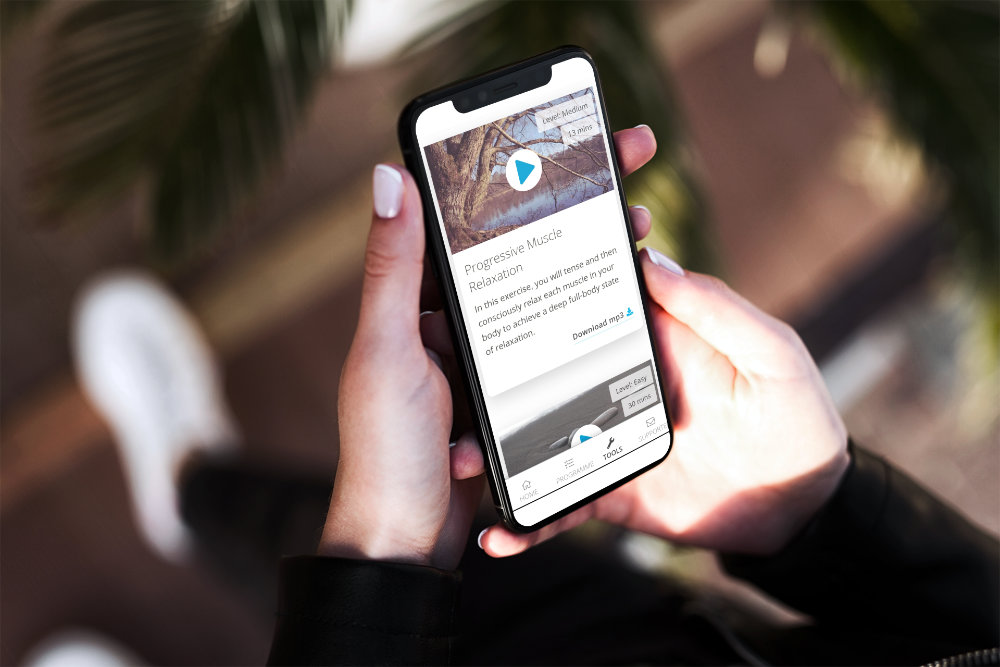
In October 2022, the SilverCloud online Cognitive Behavioural Therapy (CBT) service opened its virtual doors to help children, young people and parents across Wales manage their mental wellbeing. The SilverCloud team explains how to access the service in Powys and offers some tips to support the young people in your life.


Home schooling and pandemic lockdowns may seem like a distant memory now that we’ve (largely) returned to “normal“, yet the challenges of the past few years are having a lasting impact on our younger generation.

According to research by NHS Digital, 1 in 6 children and young people had a diagnosable mental health condition in 2021, such as anxiety or low mood. This is up from 1 in 9 in 2017.

Early intervention and support can help young people build the emotional skills that are vital for learning, life and good mental health in future.

SilverCloud has supported over 33,000 people in Wales since launching its self-referral programmes for adults in September 2020. Following a successful pilot in Powys this year, young people throughout Wales, and their parents/carers, can now access a suite of CBT-based online support programmes to help with mild-to-moderate anxiety and low mood.
  • Parents and carers can sign up for a free 12-week online therapy programme for help in supporting children and young people aged 4-18 with mild-to-moderate anxiety.
  • Teens aged 16-18 throughout Wales can sign up to our self-referral service directly via their mobile, tablet or laptop - without needing adult consent - for support with mild-to-moderate anxiety or low mood.
  • Young people aged 11+ in Powys can be referred into SilverCloud by Powys Teaching Health Board Child and Adolescent Mental Health Service (CAMHS), Powys County Council Education, Youth Service, Youth Intervention Service, Youth Justice and Early Help.
Making the service available to children, young people and their parents/ carers enables thousands more people to get early access to support when they need it.

Psychological Assistant and Clinical Online CBT Coordinator, Jess Ferdinando, explains how SilverCloud can help:

“The past couple of years have been particularly difficult for children and their families. As well as navigating the usual stresses of growing up, young people are still living with the impacts of a global health crisis.

“Supporting children and young people who are struggling with their mental health can be challenging. SilverCloud offers practical, clinically proven help for young people to manage anxiety and low mood as well as help for parents/carers in supporting them.

“Our pilot of the children’s and young person’s service has already had a positive impact in Powys, so I’m thrilled we’ve been able to extend this support to young people and their families throughout Wales.

“All our programmes are packed with useful insights, practical tools and activities to empower young people to manage their problems and apply what they learn in their daily lives.

“It’s supportive, too! We like to call it online therapy with a human touch because every client is assigned a SilverCloud supporter; this is an online CBT coordinator who guides the client through the programme and provides regular personalised feedback.

“One of the great things about SilverCloud is its flexibility; you can access the therapy programmes from any online device and work through them at your own pace, which makes it easier to fit around your life. For the best results, we recommend that people access their SilverCloud programme 3-4 times each week for 15-20 minutes each time.”

Tips for Parents Supporting a Child with Anxiety


“If your child or teen is experiencing anxiety,” continues Jess, “there’s lots you can do as a parent or carer to help them. This includes taking care yourself too! I’ve put together a few tips for parents and carers:
  1. Keep your cool. Seeing your child in distress can be upsetting. You could feel a range of emotions including sadness, frustration and even anger over what your child is going through. These are all normal responses to a challenging situation. You’re in a much better position to make sensible parenting decisions when you’re calm, as opposed to reacting emotionally.
  2. Remember to take time out for yourself to relax. Have you heard the phrase “you can’t pour from an empty cup”? It means that for us to take care of others, we also need to take care of ourselves. This is especially important if you’re helping a child who is struggling with their mental health. If you can, take some time out to do something you enjoy.
  3. Listen to your child. You may instinctively want to take action to fix whatever is causing your child to feel anxious. Sometimes, you don’t need to have the answers or fix it; take time to listen to your child and understand the situation. You child is more likely to confide in you if they feel seen and heard and know you will listen to them without judgement or criticism.
  4. Find support for yourself from professionals and other trusted adults. As a parent or carer, it’s natural to want to support your child during difficult times. Remember that you need support too. You don’t have to go it alone; reach out to trusted friends, family members or healthcare professionals if you’re struggling.
  5. Work together as a team – you’re stronger together!”


What programmes are available?


SilverCloud programmes are based on Cognitive Behavioural Therapy (CBT), an evidence-based therapy that works by encouraging young people to challenge the way they think and behave to become better equipped to deal with life’s challenges.

There are five specially designed Children & Young People (CYP) programmes available on SilverCloud; three for young people and two for parents:
  • Space from Anxiety can help young people understand their anxiety and learn skills to help them cope better.
  • Space from Low Mood can help young people to understand and manage symptoms of low mood.
  • Space from Anxiety and Low Mood can help young people understand and manage symptoms of anxiety and low mood.
  • Supporting an Anxious Child helps parents and carers of children aged 4-11 in understanding and managing their anxiety.
  • Supporting an Anxious Teen helps parents and carers of young people aged 12-18 in understanding and managing their anxiety.


How to access help for young people in Powys

People in Powys have two ways to access SilverCloud’s tailored support programmes for children, young people and parents.

1. Self-Referral – available throughout Wales

Anyone aged 16+ can sign up to a SilverCloud programme online via our self-referral service; this means you can sign-up directly without needing to be referred by a GP or healthcare professional.

Choose one of the easy-to-use, interactive online mental health and wellbeing programmes to complete over 12 weeks and receive fortnightly feedback from your online SilverCloud Supporter, one of the mental health professionals whose role is to support users of the service.

All of our adult programmes are open to individuals over 16; we recommend that young people aged 16-18 choose one of our CYP programmes which have been developed with young people in mind. Young people aged 16+ can sign up to a SilverCloud programme independently of a parent.
  • Space From Anxiety (CYP) – for young people aged 16-18.
  • Space From Low Mood (CYP) – for young people aged 16-18.
  • Space From Anxiety and Low Mood (CYP) – for young people aged 16-18.
  • Supporting an Anxious Child (parents/carers of children aged 4-11).
  • Supporting an Anxious Teen (parents/carers of young people aged 12-18).


2. Referred service (Powys residents only)

In Powys, young people aged 11+ have unique access to our CYP programmes through our referred service. Access to these programmes is only available to young people below the age of 16 following a referral to SilverCloud by one of the following teams:
  • PTHB Child and Adolescent Mental Health Service (CAMHS);
  • PCC Education, Youth Service, Youth Intervention Service, Youth Justice, Early Help.
Programmes available through our referred service:
  • Space From Anxiety (CYP) – for young people aged 11-18.
  • Space From Low Mood (CYP) – for young people aged 11-18.
  • Space From Anxiety and Low Mood (CYP) – for young people aged 11-18.
  • Supporting an Anxious Child (parents/carers of children aged 4-11).
  • Supporting an Anxious Teen (parents/carers of young people aged 12-18.


Want to know more about SilverCloud in Wales and online CBT?

If you have any queries, please email Silver.Cloud@Wales.nhs.uk


Follow us on Twitter: https://twitter.com/SilvercloudW

Monday, 5 July 2021

Managing mental health as lockdown restrictions ease this summer


It’s officially summer and we’re easing out of lockdown and into ‘normal’ life. But if you need help managing your mental health and wellbeing during this period of change, you’re not alone, as the SilverCloud Wales Online Cognitive Behavioural Therapy (CBT) team can explain.

SilverCloud Wales is an Online CBT service designed to help people aged 16+, experiencing mild to moderate anxiety, depression or stress, manage their mental health and wellbeing.

CBT works by encouraging you to challenge the way they think and behave so you’re better
equipped to deal with life’s problems.

There’s no need to be referred by a GP – you can sign-up for and access SilverCloud Wales anytime, anywhere, on your smartphone, tablet, laptop or desktop computer.

SilverCloud Wales is an NHS Wales service, run by Powys Teaching Health Board, and offers help for anxiety, depression, stress, sleep, money worries and more.

Choose one of the easy-to-use, interactive online mental health and wellbeing programmes to complete over 12 weeks and receive fortnightly feedback from a qualified SilverCloud Supporter, one of the mental health professionals whose role is to support users of the service.

SilverCloud Supporter Alexandra Birrell, explains why, if you need support managing
your mental health and wellbeing, particularly with anxiety, as lockdown restrictions ease this summer, you’re not alone…


“The past 15 months have been unprecedented. None of us have ever experienced anything like this so no-one could have possibly known what to expect.

“At the core of anxiety is often a difficulty in dealing with uncertainty, and at the core of low mood is often feelings of powerlessness and lack of control.

“We were instructed to stay home, which impacted our interaction with our social support networks, which usually serve to protect us from difficult feelings. However, 15 months later and for many these conditions have become the new normal. Now, being able to venture out of the house and managing social interactions is what brings up feelings of uncertainty.

“Of course, people will have different feelings about this, depending on their situation.

"Some people are naturally cautious whereas others are embracing the opportunity to reconnect with loved ones. The difficulty is that these differences in boundaries are now something that we must learn how to communicate and navigate.

“The way that people navigate boundaries is often related to their self-esteem. People who struggle with their self-esteem tend to wonder whether their needs are important and may struggle to communicate them. If we struggle to communicate our needs, our needs may not be met which can then confirm the feeling that one’s needs are not important.


“SilverCloud Wales users choose one online programme to complete over 12 weeks, with fortnightly feedback from a SilverCloud Supporter. SilverCloud Supporters can give users access to additional modules if we feel they need more support in certain areas. The Communications and Relationships module is a popular one…

“The Communication and Relationships module starts out with a quiz to identify your unique communication style. For example, do you see your needs as more important, of equal importance, or less important than the needs of the people around you? Do other people know what you want and need?

“If you are struggling with communication, it may be that over the years you have learned to communicate in a way that is either too aggressive or too passive to get your needs met. This module offers support and advice around learning to communicate in an assertive, yet respectful way. It also focuses on strategies that may support you in improving the relationships in your life and making sure that you have a healthy support network to lean on when you start to struggle.

“The Self-Esteem module is another one that clients find useful and relevant to their experiences. This module looks at ‘self-talk’ - the way that we speak to ourselves.

“When we are struggling with low mood or anxiety, a common symptom is negative self- talk. We may find that we tend to berate ourselves or judge ourselves in a way that we never would with a loved one who was struggling. The Self-Esteem module offers support around building a practice of self-compassion by learning to offer ourselves kindness, support, understanding and tenderness rather than beating ourselves up, which only serves to make us feel worse.

“If we can improve our self-esteem and our belief that our feelings and our needs matter, this can also support us in navigating these end of lockdown boundaries with the people around us.

“The Relaxation module features a number of exercises that can be really beneficial. Users learn helpful relaxation techniques that can be used in day-to-day life to unwind and de-stress…


“In order to change longstanding habitual patterns or tendencies, we have to be able to slow down enough to notice those patterns. Many people struggling with anxiety feel that their mind is running a mile a minute, and that one thought seems to lead into the next which leads into the next and so on. These worries may be paired with physical sensations of anxiety such as a racing heart, difficulty breathing or a tight chest.

“When practising relaxation, many people report that as their body returns to a state of rest, their mind will slow down as well. It is from this place that we can catch what difficult thoughts are coming up, notice those patterns so we can start to challenge and change them.

“My advice for maintaining positive mental health and wellbeing for people trying to adjust to the ‘new normal’ over summer is…

“Each person will need to weigh up how they feel about the restrictions lifting and what is most beneficial for their own mental health. For some, seeing their loved ones will be supportive, whereas for others it will be a source of stress and will bring up feelings of awkwardness when trying to communicate this.

“Often, people find that their mental health starts to spiral and they don’t understand why it’s happening - they just know that they’re feeling increasingly distressed, low, or anxious, or a combination of all of these feelings.

“CBT provides a framework for understanding how some of the natural and automatic ways that human brains and bodies respond to uncertainty can actually serve to make us feel worse. In that sense, the journey of recovery can be about learning to focus on that which is still within our control, and finding empowerment through identifying coping strategies and ways of better managing our feelings.”

ONE SERVICE - THREE WAYS TO ACCESS

1.  SilverCloud Wales – The flagship service, available across Wales. 

This is a self-referral service which means that you can sign-up directly, without having to be referred by your GP or other healthcare professional. Choose one of the easy-to-use, interactive online mental health and wellbeing programmes to complete over 12 weeks and receive fortnightly feedback from your online SilverCloud Supporter, one of the mental health professionals whose role is to support users of the service. Find out more and sign-up here.

2.  SilverCloud Blended – A tailored version of SilverCloud for Powys residents. 

Choose one of the easy-to-use, interactive online mental health and wellbeing programmes to complete over 12 weeks and receive six face-to-face* sessions with an Online CBT practitioner whose role is to support users of the service. To find out more and signup, please contact: Ponthafren Association covering North Powys and Brecon & District - https://www.ponthafren.org.uk; Mid and North Powys Mind covering Mid Powys - https://mnpmind.org.uk/; or Ystradgynlais Mindhttps://minditv.org.uk/.

*These may be telephone and email support sessions, depending on Covid restrictions.

3.  SilverCloud Workforce – A tailored version of SilverCloud specifically for NHS staff  
     and keyworkers. 

You'll have access to four online mental health and wellbeing programmes: Space for Resilience; Space from Stress; Space from COVID-19; Space for Sleep. This is an unsupported service so you will work your way through your programme of choice on your own, at your own pace. Sign up directly for the service without needing to be referred by your GP or other healthcare professional.

Visit https://cymru.silvercloudhealth.com/signup/ and enter access code WALES2020.

For more information about SilverCloud Wales online CBT

- If you have any queries, please email Silver.Cloud@Wales.nhs.uk or call 01874 712 428.

- Find us on Twitter: https://twitter.com/SilvercloudW

- Find us on Facebook: https://www.facebook.com/SilverCloudWales

Monday, 5 August 2019

The latest on SilverCloud - online Cognitive Behavioural Therapy

Becka Williams, Project Manager and Catrin Guest, Project Support Office & Online CBT Coordinator
by guest author Becka Williams
Project Manager, Powys Teaching Health Board

Following the implementation of our Online CBT service, SilverCloud, across Powys in May 2018, there has been a lot of work undertaken to develop the service and upscale it across Powys. 

We have received approximately 1100 referrals into the stand-alone service with referrals beings received from a range of different departments, services and healthcare professionals across the Health Board.

Work has commenced on the translation of the main Space from Anxiety and Depression programme and it is hoped that this will be ready for implementation by the end of 2019.

We were fortunate to win the Powys Teaching Health Board's Staff Excellence Award under the category of ‘Digital First’ in July which is a fantastic achievement. 


Becka Williams  Project Manager, Claire Cartwright – Director Ponthafren Association,
Jackie Jones & Sarah Dowler – Blended Online CBT Practitioners, Ponthafren

Blended Online CBT Service


We have implemented our Blended Online CBT service in partnership with Ponthafren Association in North Powys and the Mind Resource Centres in Mid and South Powys. The blended service offers access to the online platform as well as 6 face to face sessions with our Blended Online CBT Practitioners, during which they will review progress of the platform, signpost certain activities, tools and modules within the programmes and offer encouragement and support. The face to face sessions will be offered from the GP practices in Powys.

We are now ‘live’ with this service across nearly all GP practices, and where we have been unable to offer this from the specific practice, an alternative can be offered for the service users in that area should they wish to access this service.

Clinical referrals are required in to the blended service and these can currently be done through GPs of the Local Primary Mental Health Support Services (LPMHSS) within Powys Teaching Health Board.

We have currently received approximately 190 referrals into this service and are continuing to engage with the GPs and clinical teams to further upscale the blended approach.

Becka Williams, Project Manager & Catrin Guest, Project Support Office & Online CBT Coordinator raising awareness of Positive Body Image with PTHB's Occupational Health & Mental Health department during Mental Health Awareness Week

Positive Body Image

As part of Mental Health Awareness week, with ‘body image’ being the topic for 2019, we implemented our Space for Positive Body Image programme, which is now available for our healthcare professionals to refer in to.

This programme looks at the following topics:

  • Improves understanding of body image and the impact on depression and anxiety.
  • Focuses on what factors influence body image and how to improve perceptions of body image. 
  • Introduces the known risk factors of eating disorders.
  • Improves understanding of the effect of the media on understanding of the “ideal body”.
  • Encourages reduction of individuals thin-ideal internalisation through analysis of media messages.
  • Introduces self-esteem and focuses on where it comes from and how to boost it.
  • Introduces the reciprocal relationship between how we feel and how we eat, using the CBT model of Thoughts Feelings Behaviours (TFB) cycle.
  • Recognises emotional eating, mindful eating and how to have a healthy relationship with food.
  • Recognises negative automatic thoughts and how to challenge them.
  • Introduction to Mindfulness.
  • Self-esteem enhancement through activities.
  • Recognises the importance of social support in staying well.

Self-referral

We have designed, developed and recently implemented a self-referral option to this service. This service is available for all Powys residents and Powys patients that would like to self-refer onto an Online CBT Programme for depression, anxiety or stress. This service aims to offer services to those experiencing symptoms of depression, anxiety or stress who want access to an effective Online CBT therapy without having to first have an appointment with their local GP or other health professional.

People will be required to undertake an initial self-assessment and on successful completion of the self-assessment, immediate access to the online programme will be given. However, if the self-assessment results are not within the appropriate threshold for this service, a clinician from the PTHB Online CBT team will contact the person in due course for a follow up phone call assessment to determine whether the service is suitable for that person.

Sign up to the self-referral service here.

Student Programmes

The referral age for this service has now been lowered and therefore we are now accepting referrals for young people aged 16 years and above.

We have also implemented ‘student’ versions of 3 of our programmes: Space from stress, Space from anxiety and Space from depression which all offer support that relates more specifically to students such as educational stresses, friendships, relationships etc.

We have started to engage with the high schools and colleges across Powys to increase awareness of this availability to students.

Fionnuala Clayton, Psychological Assistant & Online CBT Coordinator & Catrin Guest, Project Support Office
& Online CBT Coordinator

All-Wales Roll-out


One of the key aims of this project was to explore the opportunity of implementing Online CBT across Wales, including the other Welsh Health Boards and third sector organisations.

Work has commenced on this and we went ‘live’ with the Welsh Ambulance Service NHS Trust (WAST) in December 2018 with this service being utilised within their Occupational Health and Staff Wellbeing teams.

We have also started working with Aneurin Bevan University Health Boards (ABUHB) with this service now being piloted within their Primary Care Mental Health Support Services (PCMHSS) and referrals being received since June 2019.

Engagement is still being undertaken with the other Welsh Health Boards, with a view to further roll-out this service across the different health board areas.


For further information on any aspects of the project or service, please check out this Powys Teaching Health Board website, or contact Becka Williams, Project Manager, on 01874 712 444 or becka.williams@wales.nhs.uk.

Wednesday, 3 October 2018

Introducing SilverCloud – online Cognitive Behavioural Therapy

Becka Williams, Project Manager, SilverCloud CBT
Last month I was pleased to accept an invitation to attend a Mental Health Partnership Board meeting at our Llandrindod offices, as it gave me the chance to find out more about the new online Cognitive Behavioural Therapy offering in Powys. It is called SilverCloud

Becka Williams, the Project Manager overseeing roll out of this new service across the county, gave us some background, an update on project progress and outlined plans for future development.

It was an interesting session to learn more about the new service, as individual representatives attend this quarterly partnership meeting. The reps are people who either have used, or care for somebody who has used, mental health services in Powys. Their role is to make sure user/carer voice is included in the planning of services, and here they were able to voice some immediate thoughts about online CBT.

Joy Garfitt, Assistant Director of Mental Health Services for Powys Teaching Health Board, began by explaining that CBT is a therapy that can help us think differently, particularly if we have unhelpful thoughts.

Background

Some regular readers may remember that we wrote about an earlier provision of online CBT in Powys, which was called Beating the Blues. This 3 year pilot scheme was spearheaded by a European funded project called Mastermind, but unfortunately engagement with this model was not brilliant. Out of 543 referrals to Beating the Blues, only 100 people completed the full course. Many disengaged with the process and some did not even start after being referred. Mastermind’s key aim, however, was to implement online therapies in rural areas across Europe, rather than to monitor the effectiveness of the actual CBT programme. But the project was invaluable in that many lessons were taken from this early work to help inform a new improved provision of online CBT in Powys.

In fact, many benefits of online CBT were identified directly as a result of the Mastermind scheme:

  • Online CBT provides care closer to home – anytime, anywhere. 
  • It reduces the number of unnecessary appointments. 
  • It gives almost immediate access to therapy for people. 
  • It reduces the travel time of people using services, carers and healthcare professionals. 
  • It supports Prudent Healthcare – an approach at the heart of A Healthier Wales, the Welsh Government's long-term plan for health and care. 
The Welsh Government is now providing funding to continue and upscale online CBT not just in Powys but across the length and breadth of Wales. Powys Teaching Health Board is leading on the roll-out of SilverCloud across the country, starting with Powys. The aim is to:
  • Increase options available to people experiencing mild / moderate anxiety and / or depression. 
  • Reduce waiting lists / times by improving quicker access to therapies. 
  • Improve equality of access to mental health care across both urban and rural areas.


Project progress 

SilverCloud online CBT went live in Powys on 1 May 2018. There are now 8 programmes available, including Space from Anxiety & Depression, Space from Stress and Space from Chronic Pain. Since the launch about 300 people have been referred to the programme, which can be accessed on smartphones and tablets as well as computers. Referrers can be GPs, Occupational Therapists, staff in the Community Mental Health, Local Primary Care and Long Term Conditions teams. In future people will be able to refer themselves onto the programme.

At this point in the meeting the individual reps began asking questions about managing risk. What happens if someone is considering self-harming? If it’s midnight? If someone is extremely lonely and this is all they have been offered to deal with their depression or anxiety? Joy described the online CBT as “adding another tool in the box for people”. It might not be right for those wanting face-to-face talking therapy, but others may prefer to do it privately. It is not aimed at people experiencing severe and enduring mental health issues. If someone has complex needs they will be referred to a different service. They may still access SilverCloud CBT but as an additional therapy to enhance what is already being done by mental health practitioners working to provide care in primary (via GP services) and secondary (via Community Mental Health) teams.

From day one when people register on SilverCloud, they have access to all the programmes for 12 months. Staff closely monitor their engagement with the platform for 3 months, but people can provide feedback for the whole period. Risk alerts are set in place, so that if anyone expresses an intention to self-harm they are contacted straight away and referred to a health care professional as appropriate. The service is monitored between 9am – 5pm during the week, but details of support / help out-of-hours are provided. Online CBT is not designed as an emergency response service.

People can write in journals as part of the programme, and choose to share (or not) the content with the online CBT co-ordinator. Some online content, such as the Mindfulness videos, can be downloaded onto a computer for future use. If access to an online device is not available people can use computers with privacy screens at their local libraries and further options will be available at Job Centres ultimately. Regular online reviews take place with the co-ordinator, and phone conversations are also possible. The whole process is confidential unless policies around safeguarding issues and / or criminal intent are set in motion.


Future development

Work is currently underway to further develop some of the strands of the online CBT, including:

  • A combination of online CBT and face-to-face counselling, known as ‘blended’ counselling. The health board will be working with third sector organisations to provide additional support to some people using SilverCloud CBT. 
  • The self-referral model for those who do not see their GP or access any other help. This will be the first time in Powys that open access is given to such a service and should be available in the New Year. 
Whilst Welsh translation of relevant forms and help pages has already taken place, the platform as a whole now needs to be translated. The design and roll-out of an All-Wales SilverCloud online CBT platform is then the key next step.

And, importantly, Becka is very keen to receive feedback from people who have used SilverCloud CBT, to help inform future development of the online provision in Powys and further afield.

If you have used SilverCloud online CBT and would like to let us know what you think, you can email us at mentalhealth@pavo.org.uk Alternatively contact Becka Williams directly at becka.williams@wales.nhs.uk

And what are your thoughts on online CBT generally? Let us know in the comments box below.


Feedback about SilverCloud CBT 

I found SilverCloud very easy to use and was surprised at how well developed and researched the platform was. 

I have found SilverCloud hugely useful in teaching me ways to improve my mental health and managing stressful situations. I am excited to continue using the skills I’ve learnt. 

I have been feeling more positive since taking part in this programme. I have been able to do simple things like taking the bus and going for a walk alone a lot more easily than about a month ago.

Monday, 25 April 2016

The latest on MasterMind - computerised CBT in Powys

Powys Teaching Health Board staff at a MasterMind seminar in Odense, Denmark in October 2015.
Front row far right: Dr Wasi Mohamad, PTHB Clinical Director & Consultant Psychiatrist who is the Clinical Lead for MasterMind; next to him: Becka Williams Project Administration Assistant. Back row second from right: Harold Proctor Dementia Lead for PTHB and the MasterMind Project Executive.
Back in August 2014 our friends at Powys Teaching Health Board wrote on Introducing MasterMind - computerised CBT in Powys. 

The MasterMind project is currently being piloted across Europe, including Powys. Some individuals with a diagnosis of low to moderate depression have been able to access the computerised Cognitive Behavioural Therapy course in their own homes. We decided now was a good time for an update and Becka Williams, who works with the team overseeing this project, gives us the latest news.


MasterMind – where are we?

We have just begun the final year of the MasterMind project with the project due close in February 2017.

We went ‘live’ with the online CBT programme in March 2015 and have had 216 referrals since. We have implemented this service into the Local Primary Mental Health Support Service teams (LPMHSS), Pain Management and Occupational Health and in recent weeks have started engaging with the GP practices in Powys to encourage GP direct referrals.

A bit about the programme…

Powys staff opted for Beating the Blues as their software of choice which was developed by our service provider Ultrasis with ownership transferring to 365 Health & Wellbeing.

What does Beating the Blues consist of?

Beating the Blues consists of eight, approximately 1-2 hour sessions recommended to be completed weekly. The programme is interactive. During sessions you can watch video clips, complete exercises and learn CBT techniques that can help with depression and anxiety. Each week tasks will be given to be completed during the time between sessions.

How will it help?

Beating the Blues will help to pinpoint and change unhelpful ways of thinking that can affect how you feel, whilst teaching you more effective ways of solving problems.

How many sessions need to be completed?

It is important to complete as many sessions as possible. When completing the first couple of sessions it may be hard to see how it is relevant to your situation, however the programme is designed to build up your knowledge and skills over the weeks, if you stop too early, you will not get the full benefit of the treatment. The advice is to complete all eight sessions.

Where can the course be completed?

The course can be completed in your home or in a community site such as a library. To do it at home you need a PC or laptop with either speakers or earphones, along with access to a printer as there will also be a need to print material most weeks. Beating the Blues does not run on iPads, Tablets or Smart Phones at present. When doing it at home it is important to set aside enough time to complete your session at roughly the same time each week and ensure you have sufficient privacy to do so. You do not have to complete all sessions from the same location, you may want to complete some from home and some form one of the community sites. 


Feedback from participants

“The sessions were brilliant.”

“The programme was good in many aspects.”

Most techniques I knew but Beating the Blues helped me put them into action.”

The Mastermind seminar in Denmark, October 2015

Collaborative Care through Videoconferencing (cCVC)

The second part of the MasterMind project is the collaboration of care through videoconferencing (VC) which we are currently implementing. In the initial stages we will be implementing this in the Crisis Resolution Home Treatment Teams (CRHTT) and the Community Mental Healthcare Teams (CMHT). In short, a member of these teams will meet with the patient and together they will have an appointment with the Consultant Psychiatrist through the use of Videoconferencing. The VC software that has been rolled out across the Health Board is Skype for Business.

Our EU Partners

Throughout the project, there have been a number of meetings and events taking place across Europe to get together with our European MasterMind partners to discuss the project, the pros and cons and generally share thoughts and ideas. The project has been a great opportunity for networking, building working relationships and shared learning. 


Many thanks to Becka for the update. Have you had experience of Beating the Blues or other computerised CBT sessions? Let us know what you think in the comments box below.

You can find out more about the MasterMind Project on the project website, and also join the debate on Twitter.

Tuesday, 5 August 2014

Introducing Mastermind - computerised CBT

Tanya Summerfield (left), an ICT (Information & Communication Technology) Project Manager at Powys teaching Health Board, is working to develop an innovative digital project to help support people experiencing depression in Powys. 

She is supported by her colleague Menna Reese (below), who is also helping to promote the roll-out of Mastermind in Powys.

We spoke to Tanya and Menna recently to find out more about Mastermind.

Tell us about your role at the health board 

To facilitate the implementation of two European Union projects, one of which is Mastermind, which is the introduction of the computerised Cognitive Behavior Therapy across Powys by November 2014.

What is the Mastermind Project?

The Mastermind Project aims to make high quality treatment for depression more widely available across Europe through the use of ICT. In Powys the software of choice is ‘Beating the Blues’ developed by Ultrasis.

What is cCBT? 
Computerised Cognitive Behavioral Therapy. 

Tell us about the Powys pilot of the Mastermind project

The pilot aims to facilitate access to cCBT through purchasing licenses and training primary care mental health staff in its application along with provision of video conferencing facilities between ‘GP and Specialist Clinician’ or ‘Specialist Clinician and patient’. 

How do you think it will benefit people who may be experiencing mental distress or be depressed?

The Programme will only be available for people with a diagnosis of low to moderate depression and the benefit will be access to the cCBT in the patient's own home at their convenience.

What is particularly innovative about the project? 

The Programme focuses on how to improve the lives of service users and their families using a recovery and enablement approach through embracing technological advances to date and minimising the need to travel to treatment centres.

Why has the health board decided to offer this type of mental health services in Powys?

In recognition of the rural terrain and the ratio of the primary mental health practitioners to the population, funding was sought through the EU to pilot the scheme prior to it becoming mainstream. In this way, we will be able to make psychological therapies more widely available.

What kind of links is the health board making with mental health services in other European countries as a result of this work, and how could this be beneficial to people in Powys?

Sharing good practice and regularly monitoring reports shared across 11 European sites, taking advantage of networking opportunities sharing experiences.

When will the Mastermind service be made available and who will be eligible to access it and how?

The time schedule identifies November 2014 as the start date and the trial will run for 17 months. Eligibility will depend on the diagnosis of low to moderate depression by the general practitioner, primary mental health clinicians or secondary mental health service.

How does the project tie in with the aims of the Together for Mental Health (Welsh Government strategy) and Powys Hearts & Minds strategy?

Poor mental health and illness have a significant impact on individuals, society and the economy overall. Together for Mental Health (Welsh Government 2012) sets out the Welsh Government's ambitions for improving the mental health service and promoting better mental health wellbeing across the whole population. This project will widen the availability of psychological therapies.

If people want to find out more about the Mastermind Project, who can they contact?

The EU Project Office on 01874 712765 or email Tanya.Summerfield@wales.nhs.uk

Thank you Tanya and Menna for introducing us to the Mastermind Project in Powys. You can find out more about the Mastermind Project on the project website here, and also join the debate on Twitter here, or tell us what you think by commenting below.

Friday, 28 February 2014

White Rabbit Number Six: John Drake’s Mental Health Blog - 1

As the DIY Futures project comes to an end, the focus is on the stories in the book "It's the inside that matters," which have drawn some really positive feedback. But there are so many stories out there, and one book can never be long enough...  So when we heard about John Drake's experiences recently we invited him to write a guest post for the blog.  John soon came back to us with not one but three posts! Here is Part 1... with 2 & 3 due to follow shortly.


1: Down the Rabbit Hole

There is nothing so very remarkable about falling down that very deep well we call depression. What follows is just one man’s experience...

It was quite a relief when I was first diagnosed with depression. My initial reaction was: Thank God for that, I thought I was going mad! I was certainly getting fixated on some strange ideas and experiencing overwhelming feelings of dread which made it difficult to continue to work...and I loved my job.

My GP referred me to a Community Psychiatric Nurse. He assessed me as suffering from mild to moderate depression and recommended a short course of anti-depressants. But I was very resistant to the idea because I had heard so much about the bad side effects... Fortunately the nurse was very sympathetic to my attitude and suggested I instead try St John’s Wort (a herbal alternative to pharmaceutical medicine). My GP was also supportive of this and said that I should treat it like any antidepressant and use it regularly for six months.

After three weeks I felt well enough to go back to work and in fact, with the aid of St John’s Wort, I managed my condition for the next seven years, throwing myself into my work with renewed dedication. I still suffered from occasional bouts of anxiety but I knew that I had to just keep going...

Until one day I couldn’t... It was as if an abyss had opened up and I was about to fall into it.

I rang the surgery but my GP wouldn’t be available for a couple of weeks! I knew I had to talk to someone straight away and fortunately one of the other doctors had a cancellation and was able to fit me in. She listened to me for what must have been quite a long time (once the dam broke, the flood was overwhelming), signed me off work and referred me to the counselling service that was attached to the surgery.

And now that I was in safe hands, I could let myself fall...

I was offered what I understand to be the standard counselling service through the NHS, which is six sessions of Cognitive Behavioural Therapy. Towards the end of this period I was offered an extension of three further sessions, which I was happy to accept. When I first began therapy, my counsellor assessed me as having moderate to severe depression. By the time I finished the course, I felt ready to return to work. Although our sessions were coming to an end, the counsellor assured me that if I ever needed to see him again I could get a new referral through the surgery.

Throughout these first few months of illness, I had felt very well supported both by my counsellor and by the GP. At her suggestion, I continued to be seen exclusively by the same doctor who had been available on that crucial day – and I think that this continuity of service was very important in my being able to cope with day-to-day living, without being hospitalised – which, along with being forced to take antidepressants other than St John’s Wort, was my biggest fear. Rightly or wrongly, I believed that pharmaceutical antidepressants would take away my mind and that, once in hospital, I would never come out again.

The CBT sessions had taught me how to cope with going to shops and facing the dreaded ‘how are you?’ question from well-meaning acquaintances, but going back to work was another matter. Even though I had met with my boss and we had agreed a back-to-work strategy, it all fell apart when a personal crisis caused everything to unravel – and I was back almost, but not quite, where I started – still down the rabbit hole but resting somewhat precariously on a ledge – no longer falling, but not yet able to climb out.

This time my GP was adamant that I should take stronger antidepressants – but I was equally adamant that I wouldn’t. To her credit, my doctor accepted my decision and continued to support me in other ways. I was referred back to the counselling service and, this time, I was told that I could book a session whenever I needed it, through the appointments desk. I assume this was offered to me as my counsellor believed that I wasn’t the type to abuse the privilege – and in fact I only took advantage of it a handful of times.

Throughout this time I felt that I was being supported in the way that was right for me by everyone concerned in my welfare – and for this I will always be grateful.

Meanwhile, however, I was still being signed off work. Then one day I got a bit of a shock when the finance officer informed me that my sick pay had run out and that I needed to contact the Job Centre about claiming long-term sickness benefit.

And that’s when my problems really started...

Friday, 14 December 2012

Can I have some Cognitive Behavioural Therapy please?

I heard a true story last week, about someone going to a GP surgery and specifically asking for CBT (Cognitive Behavioural Therapy). The person was feeling down because of something that had happened in their life, and decided they didn't want to take medication, but they would like to give CBT a go. But no CBT counsellors were available, only online CBT sessions (I'm not quite sure what these would involve). Anyway, online therapy was not what this particular patient wanted. She went away disappointed and still depressed.

We know there are plans and good intentions to increase the number of talking therapies made available to people via their GPs...it says so in the new law, the Mental Health (Wales) Measure. The problem seems to be that currently the supply just doesn't meet the demand.  So people are left feeling a little bit cheated and frustrated (alongside the original mental distress they went to their GP with). When you're feeling depressed, you want help now, not six months or a year later. 

The fact is that CBT does work for some people, according to a recent study in The Lancet.   You can find out more on this BBC webpage. 

I can't help wondering, what are the issues with providing CBT counsellors? Is it about... money to pay for them? Or finding suitably qualified people? Or... just that this is one of a thousand tasks the NHS in Wales have to sort out, and so far it's only at 579 on the list.... (so that comes down to money again....) 

If you've tried to access CBT through your GP surgery - we'd be interested to know how you got on.

Meanwhile, you can find out more and watch a video about CBT here, and read a CBT flyer on The Royal College of Psychiatrists webpage.

For the full report from The Lancet, click here.