Showing posts with label CBT. Show all posts

Thursday, 22 October 2020

Online therapy service to help with winter blues

by guest author Carol Brown
SilverCloud Project Manager, Powys Teaching Health Board

Every October, the days get shorter, the nights longer, and there’s a rise in demand for mental health services. But the SilverCloud Online Cognitive Behavioural Therapy (CBT) service remains open for business.

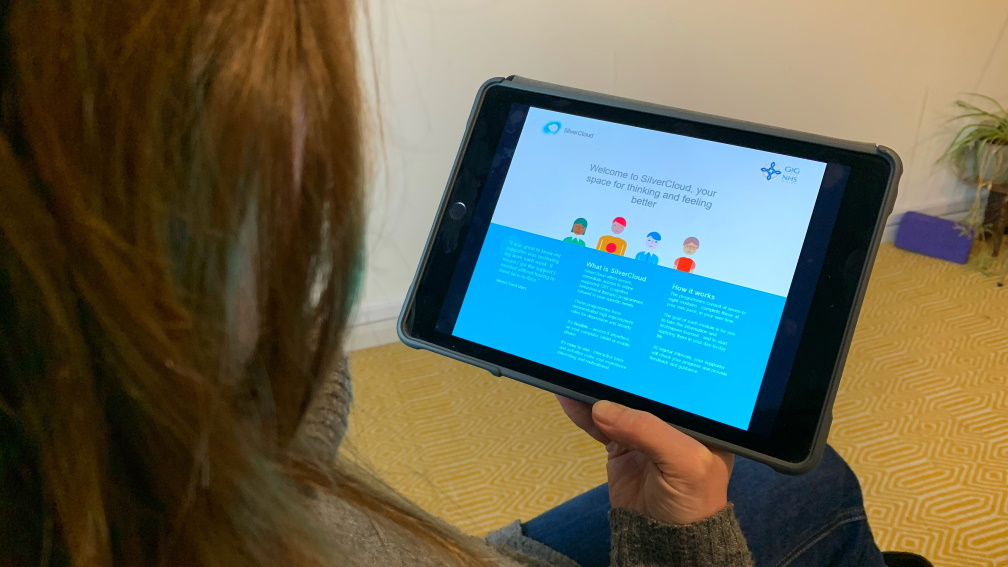
Powys residents have unique access to the SilverCloud Blended Online CBT service, which offers people aged 16+, who are experiencing mild to moderate anxiety, depression or stress, a 12-week course of online therapy via their smartphone, tablet, laptop or desktop computer, plus six sessions with an Online CBT practitioner.

Pre-Covid, the six sessions with an Online CBT practitioner took place face-to-face at GP surgeries in Powys, now they take place over the phone and by email.

The Online CBT practitioners review users’ progress on SilverCloud, signpost activities and tools available on the online therapy system, and offer encouragement and support.

The SilverCloud Blended Online CBT service is run by Powys Teaching Health Board in partnership with Ponthafren Association in North Powys, Mid and North Powys MindBrecon Mind and 
Ystradgynlais Mind.

Anthea Jones, Mid & North Powys Mind

Anthea Jones from Mid & North Powys Mind tells us how they've adapted their service from in-person to online and how social media has helped them engage with people. 

“The winter blues is a phenomenon. There is always an increase in admissions to mental health services when the clocks go back. It really does help to make sure you get outside and get as much daylight as possible in autumn and winter. Think of it as self-care. It keeps your mood up having the light. 

“As soon as Covid hit, we moved from meeting clients face-to-face in the GP surgery to supporting people over the phone and by email.

“We also widened the referral process so that as well as GPs, other healthcare and mental health professionals can refer people to us. 

“At Mid and North Powys Mind, we responded to a demand in lockdown by recording and sharing videos to our Facebook page to support people with their mental health and wellbeing.

“We’ve made videos explaining SilverCloud and the different tools and activities it features such as how CBT can help with anxiety, the link between food and mood, gratitude, mindfulness, Tai Chi, and the importance of getting out in nature to keep your mood up. There’s lots on our Facebook page.

“The response has been really positive. We get feedback from people saying ‘thanks’ and ‘that’s really helped me’ which is good to hear. Our viewing figures are up to 2,000 per broadcast and that’s spurred us on to keep going.

Tackling overthinking

“One of the common things I’ve found with people who use the SilverCloud Blended Online CBT service is the overthinking. It’s like everyone’s living a second life in their head, thinking about things too much, dwelling on things, especially with the uncertainty that Covid has brought to our lives.

“To help with this, I walk clients through the Thoughts, Feelings, Behaviours cycle, which shows you how what you think affects how you feel and how you behave. This is explained on SilverCloud.

“Keeping a thought diary can help get thoughts out of your head and help you see patterns that you can learn from, such as thoughts that come up every day and thoughts you might need to look at more deeply.

“On a practical level, positive self-talk can help. So ‘I can’t do anything right’ becomes ‘I can do better next time’, for example. Upping your activity levels is also key. Break up the time you spend sitting and thinking and get up and out, using your hands and feet and losing yourself in physical activity. Being active can make such a difference.


How does SilverCloud Blended Online CBT work?

“When people are first referred to SilverCloud Blended Online CBT we’ll have an hour for our first session together where I help them get set up, walk them through how to use it and get the most out of it.

“The amount of time people spend using SilverCloud is flexible, because users can log-in and work through the programme in a way that fits into their lifestyles. Ideally, people log-in for around 15 minutes every day to work their way through the activities and tasks that make up their programme and they’ll complete a fortnightly review online.

“I’ll have a look at their results and use the five follow-up sessions, which are around 20 minutes each, to give them a call – or email if they prefer – to discuss their progress, give feedback and offer support. 

Who do you work with?

“I work with a real range of people on the SilverCloud Blended Online CBT service, aged 16 to 80.

“I have been working with a lady in her seventies who’s been really great with it. She’s put a lot of effort into using SilverCloud and we’ve built up a really good rapport over the 12-week programme and her mental health and wellbeing scores have vastly improved.

“Then, the fact that it’s an online programme naturally attracts younger people, men especially, who like that they can work on their mental health and wellbeing in private, so to speak, without everyone knowing about it.

“For example, I started working with a student in his early twenties during lockdown who was struggling with anxiety. He didn’t feel able to talk about this with family and friends but he started using SilverCloud and likes the conversations we have around it.

“I find the service is also popular with men in their early thirties. Again, anxiety is a common issue and being able to do the programme online with the support from an Online CBT practitioner like myself means the blended approach really works for them.

“SilverCloud gives people the chance to lead a ‘normal’ life but with backup support. Plus, being an online service, it fits around working life and I think because of lockdown, more people are looking for online solutions.

“Now, because of Covid, they don’t have to take the afternoon off for a face-to-face appointment with me at the GP surgery. They know we’ll check in with them over the phone or by email. And an online service is useful for people in rural areas like Powys where the geography can pose a challenge to accessing health services at the best of times. 


Anxiety is a common issue

“Users can choose from a range of mental health and wellbeing programmes to complete at their own pace over 12 weeks. Programme options include help with anxiety, depression, stress, sleep, and money worries.

“The programmes that help with anxiety are most popular with people I work with. I’m keen to point people towards the resilience programme as it can really help with thoughts about going into lockdown again and being down about life.”
  • Mid and North Powys Mind Facebook You can view their mental health and wellbeing videos on www.facebook.com/mnpowysmind/
  • SilverCloud Blended Online CBT service available in Powys. If you are interested in signing up for this combination of online CBT with phone call and email support sessions with an Online CBT practitioner, please contact Ponthafren Association in North PowysMid and North Powys Mind, Brecon Mind or Ystradgynlais Mind. Alternatively, please email Silver.Cloud@Wales.nhs.uk with the subject line ‘SilverCloud Blended Online CBT service’ or call 01874 712 428.
  • SilverCloud Self-Referral available across Wales If you’re aged 16+ you can now sign up directly for SilverCloud Online CBT without needing to go through your GP or other healthcare professional. Although an online self-help service, you will be allocated an Online CBT co-ordinator who will liaise with you via the SilverCloud platform in order to guide you through the programme and monitor your progress.


Monday, 5 August 2019

The latest on SilverCloud - online Cognitive Behavioural Therapy

Becka Williams, Project Manager and Catrin Guest, Project Support Office & Online CBT Coordinator
by guest author Becka Williams
Project Manager, Powys Teaching Health Board

Following the implementation of our Online CBT service, SilverCloud, across Powys in May 2018, there has been a lot of work undertaken to develop the service and upscale it across Powys. 

We have received approximately 1100 referrals into the stand-alone service with referrals beings received from a range of different departments, services and healthcare professionals across the Health Board.

Work has commenced on the translation of the main Space from Anxiety and Depression programme and it is hoped that this will be ready for implementation by the end of 2019.

We were fortunate to win the Powys Teaching Health Board's Staff Excellence Award under the category of ‘Digital First’ in July which is a fantastic achievement. 


Becka Williams  Project Manager, Claire Cartwright – Director Ponthafren Association,
Jackie Jones & Sarah Dowler – Blended Online CBT Practitioners, Ponthafren

Blended Online CBT Service


We have implemented our Blended Online CBT service in partnership with Ponthafren Association in North Powys and the Mind Resource Centres in Mid and South Powys. The blended service offers access to the online platform as well as 6 face to face sessions with our Blended Online CBT Practitioners, during which they will review progress of the platform, signpost certain activities, tools and modules within the programmes and offer encouragement and support. The face to face sessions will be offered from the GP practices in Powys.

We are now ‘live’ with this service across nearly all GP practices, and where we have been unable to offer this from the specific practice, an alternative can be offered for the service users in that area should they wish to access this service.

Clinical referrals are required in to the blended service and these can currently be done through GPs of the Local Primary Mental Health Support Services (LPMHSS) within Powys Teaching Health Board.

We have currently received approximately 190 referrals into this service and are continuing to engage with the GPs and clinical teams to further upscale the blended approach.

Becka Williams, Project Manager & Catrin Guest, Project Support Office & Online CBT Coordinator raising awareness of Positive Body Image with PTHB's Occupational Health & Mental Health department during Mental Health Awareness Week

Positive Body Image

As part of Mental Health Awareness week, with ‘body image’ being the topic for 2019, we implemented our Space for Positive Body Image programme, which is now available for our healthcare professionals to refer in to.

This programme looks at the following topics:

  • Improves understanding of body image and the impact on depression and anxiety.
  • Focuses on what factors influence body image and how to improve perceptions of body image. 
  • Introduces the known risk factors of eating disorders.
  • Improves understanding of the effect of the media on understanding of the “ideal body”.
  • Encourages reduction of individuals thin-ideal internalisation through analysis of media messages.
  • Introduces self-esteem and focuses on where it comes from and how to boost it.
  • Introduces the reciprocal relationship between how we feel and how we eat, using the CBT model of Thoughts Feelings Behaviours (TFB) cycle.
  • Recognises emotional eating, mindful eating and how to have a healthy relationship with food.
  • Recognises negative automatic thoughts and how to challenge them.
  • Introduction to Mindfulness.
  • Self-esteem enhancement through activities.
  • Recognises the importance of social support in staying well.

Self-referral

We have designed, developed and recently implemented a self-referral option to this service. This service is available for all Powys residents and Powys patients that would like to self-refer onto an Online CBT Programme for depression, anxiety or stress. This service aims to offer services to those experiencing symptoms of depression, anxiety or stress who want access to an effective Online CBT therapy without having to first have an appointment with their local GP or other health professional.

People will be required to undertake an initial self-assessment and on successful completion of the self-assessment, immediate access to the online programme will be given. However, if the self-assessment results are not within the appropriate threshold for this service, a clinician from the PTHB Online CBT team will contact the person in due course for a follow up phone call assessment to determine whether the service is suitable for that person.

Sign up to the self-referral service here.

Student Programmes

The referral age for this service has now been lowered and therefore we are now accepting referrals for young people aged 16 years and above.

We have also implemented ‘student’ versions of 3 of our programmes: Space from stress, Space from anxiety and Space from depression which all offer support that relates more specifically to students such as educational stresses, friendships, relationships etc.

We have started to engage with the high schools and colleges across Powys to increase awareness of this availability to students.

Fionnuala Clayton, Psychological Assistant & Online CBT Coordinator & Catrin Guest, Project Support Office
& Online CBT Coordinator

All-Wales Roll-out


One of the key aims of this project was to explore the opportunity of implementing Online CBT across Wales, including the other Welsh Health Boards and third sector organisations.

Work has commenced on this and we went ‘live’ with the Welsh Ambulance Service NHS Trust (WAST) in December 2018 with this service being utilised within their Occupational Health and Staff Wellbeing teams.

We have also started working with Aneurin Bevan University Health Boards (ABUHB) with this service now being piloted within their Primary Care Mental Health Support Services (PCMHSS) and referrals being received since June 2019.

Engagement is still being undertaken with the other Welsh Health Boards, with a view to further roll-out this service across the different health board areas.


For further information on any aspects of the project or service, please check out this Powys Teaching Health Board website, or contact Becka Williams, Project Manager, on 01874 712 444 or becka.williams@wales.nhs.uk.

Wednesday, 3 October 2018

Introducing SilverCloud – online Cognitive Behavioural Therapy

Becka Williams, Project Manager, SilverCloud CBT
Last month I was pleased to accept an invitation to attend a Mental Health Partnership Board meeting at our Llandrindod offices, as it gave me the chance to find out more about the new online Cognitive Behavioural Therapy offering in Powys. It is called SilverCloud

Becka Williams, the Project Manager overseeing roll out of this new service across the county, gave us some background, an update on project progress and outlined plans for future development.

It was an interesting session to learn more about the new service, as individual representatives attend this quarterly partnership meeting. The reps are people who either have used, or care for somebody who has used, mental health services in Powys. Their role is to make sure user/carer voice is included in the planning of services, and here they were able to voice some immediate thoughts about online CBT.

Joy Garfitt, Assistant Director of Mental Health Services for Powys Teaching Health Board, began by explaining that CBT is a therapy that can help us think differently, particularly if we have unhelpful thoughts.

Background

Some regular readers may remember that we wrote about an earlier provision of online CBT in Powys, which was called Beating the Blues. This 3 year pilot scheme was spearheaded by a European funded project called Mastermind, but unfortunately engagement with this model was not brilliant. Out of 543 referrals to Beating the Blues, only 100 people completed the full course. Many disengaged with the process and some did not even start after being referred. Mastermind’s key aim, however, was to implement online therapies in rural areas across Europe, rather than to monitor the effectiveness of the actual CBT programme. But the project was invaluable in that many lessons were taken from this early work to help inform a new improved provision of online CBT in Powys.

In fact, many benefits of online CBT were identified directly as a result of the Mastermind scheme:

  • Online CBT provides care closer to home – anytime, anywhere. 
  • It reduces the number of unnecessary appointments. 
  • It gives almost immediate access to therapy for people. 
  • It reduces the travel time of people using services, carers and healthcare professionals. 
  • It supports Prudent Healthcare – an approach at the heart of A Healthier Wales, the Welsh Government's long-term plan for health and care. 
The Welsh Government is now providing funding to continue and upscale online CBT not just in Powys but across the length and breadth of Wales. Powys Teaching Health Board is leading on the roll-out of SilverCloud across the country, starting with Powys. The aim is to:
  • Increase options available to people experiencing mild / moderate anxiety and / or depression. 
  • Reduce waiting lists / times by improving quicker access to therapies. 
  • Improve equality of access to mental health care across both urban and rural areas.


Project progress 

SilverCloud online CBT went live in Powys on 1 May 2018. There are now 8 programmes available, including Space from Anxiety & Depression, Space from Stress and Space from Chronic Pain. Since the launch about 300 people have been referred to the programme, which can be accessed on smartphones and tablets as well as computers. Referrers can be GPs, Occupational Therapists, staff in the Community Mental Health, Local Primary Care and Long Term Conditions teams. In future people will be able to refer themselves onto the programme.

At this point in the meeting the individual reps began asking questions about managing risk. What happens if someone is considering self-harming? If it’s midnight? If someone is extremely lonely and this is all they have been offered to deal with their depression or anxiety? Joy described the online CBT as “adding another tool in the box for people”. It might not be right for those wanting face-to-face talking therapy, but others may prefer to do it privately. It is not aimed at people experiencing severe and enduring mental health issues. If someone has complex needs they will be referred to a different service. They may still access SilverCloud CBT but as an additional therapy to enhance what is already being done by mental health practitioners working to provide care in primary (via GP services) and secondary (via Community Mental Health) teams.

From day one when people register on SilverCloud, they have access to all the programmes for 12 months. Staff closely monitor their engagement with the platform for 3 months, but people can provide feedback for the whole period. Risk alerts are set in place, so that if anyone expresses an intention to self-harm they are contacted straight away and referred to a health care professional as appropriate. The service is monitored between 9am – 5pm during the week, but details of support / help out-of-hours are provided. Online CBT is not designed as an emergency response service.

People can write in journals as part of the programme, and choose to share (or not) the content with the online CBT co-ordinator. Some online content, such as the Mindfulness videos, can be downloaded onto a computer for future use. If access to an online device is not available people can use computers with privacy screens at their local libraries and further options will be available at Job Centres ultimately. Regular online reviews take place with the co-ordinator, and phone conversations are also possible. The whole process is confidential unless policies around safeguarding issues and / or criminal intent are set in motion.


Future development

Work is currently underway to further develop some of the strands of the online CBT, including:

  • A combination of online CBT and face-to-face counselling, known as ‘blended’ counselling. The health board will be working with third sector organisations to provide additional support to some people using SilverCloud CBT. 
  • The self-referral model for those who do not see their GP or access any other help. This will be the first time in Powys that open access is given to such a service and should be available in the New Year. 
Whilst Welsh translation of relevant forms and help pages has already taken place, the platform as a whole now needs to be translated. The design and roll-out of an All-Wales SilverCloud online CBT platform is then the key next step.

And, importantly, Becka is very keen to receive feedback from people who have used SilverCloud CBT, to help inform future development of the online provision in Powys and further afield.

If you have used SilverCloud online CBT and would like to let us know what you think, you can email us at mentalhealth@pavo.org.uk Alternatively contact Becka Williams directly at becka.williams@wales.nhs.uk

And what are your thoughts on online CBT generally? Let us know in the comments box below.


Feedback about SilverCloud CBT 

I found SilverCloud very easy to use and was surprised at how well developed and researched the platform was. 

I have found SilverCloud hugely useful in teaching me ways to improve my mental health and managing stressful situations. I am excited to continue using the skills I’ve learnt. 

I have been feeling more positive since taking part in this programme. I have been able to do simple things like taking the bus and going for a walk alone a lot more easily than about a month ago.

Tuesday, 5 August 2014

Introducing Mastermind - computerised CBT

Tanya Summerfield (left), an ICT (Information & Communication Technology) Project Manager at Powys teaching Health Board, is working to develop an innovative digital project to help support people experiencing depression in Powys. 

She is supported by her colleague Menna Reese (below), who is also helping to promote the roll-out of Mastermind in Powys.

We spoke to Tanya and Menna recently to find out more about Mastermind.

Tell us about your role at the health board 

To facilitate the implementation of two European Union projects, one of which is Mastermind, which is the introduction of the computerised Cognitive Behavior Therapy across Powys by November 2014.

What is the Mastermind Project?

The Mastermind Project aims to make high quality treatment for depression more widely available across Europe through the use of ICT. In Powys the software of choice is ‘Beating the Blues’ developed by Ultrasis.

What is cCBT? 
Computerised Cognitive Behavioral Therapy. 

Tell us about the Powys pilot of the Mastermind project

The pilot aims to facilitate access to cCBT through purchasing licenses and training primary care mental health staff in its application along with provision of video conferencing facilities between ‘GP and Specialist Clinician’ or ‘Specialist Clinician and patient’. 

How do you think it will benefit people who may be experiencing mental distress or be depressed?

The Programme will only be available for people with a diagnosis of low to moderate depression and the benefit will be access to the cCBT in the patient's own home at their convenience.

What is particularly innovative about the project? 

The Programme focuses on how to improve the lives of service users and their families using a recovery and enablement approach through embracing technological advances to date and minimising the need to travel to treatment centres.

Why has the health board decided to offer this type of mental health services in Powys?

In recognition of the rural terrain and the ratio of the primary mental health practitioners to the population, funding was sought through the EU to pilot the scheme prior to it becoming mainstream. In this way, we will be able to make psychological therapies more widely available.

What kind of links is the health board making with mental health services in other European countries as a result of this work, and how could this be beneficial to people in Powys?

Sharing good practice and regularly monitoring reports shared across 11 European sites, taking advantage of networking opportunities sharing experiences.

When will the Mastermind service be made available and who will be eligible to access it and how?

The time schedule identifies November 2014 as the start date and the trial will run for 17 months. Eligibility will depend on the diagnosis of low to moderate depression by the general practitioner, primary mental health clinicians or secondary mental health service.

How does the project tie in with the aims of the Together for Mental Health (Welsh Government strategy) and Powys Hearts & Minds strategy?

Poor mental health and illness have a significant impact on individuals, society and the economy overall. Together for Mental Health (Welsh Government 2012) sets out the Welsh Government's ambitions for improving the mental health service and promoting better mental health wellbeing across the whole population. This project will widen the availability of psychological therapies.

If people want to find out more about the Mastermind Project, who can they contact?

The EU Project Office on 01874 712765 or email Tanya.Summerfield@wales.nhs.uk

Thank you Tanya and Menna for introducing us to the Mastermind Project in Powys. You can find out more about the Mastermind Project on the project website here, and also join the debate on Twitter here, or tell us what you think by commenting below.

Friday, 28 February 2014

White Rabbit Number Six: John Drake’s Mental Health Blog - 1

As the DIY Futures project comes to an end, the focus is on the stories in the book "It's the inside that matters," which have drawn some really positive feedback. But there are so many stories out there, and one book can never be long enough...  So when we heard about John Drake's experiences recently we invited him to write a guest post for the blog.  John soon came back to us with not one but three posts! Here is Part 1... with 2 & 3 due to follow shortly.


1: Down the Rabbit Hole

There is nothing so very remarkable about falling down that very deep well we call depression. What follows is just one man’s experience...

It was quite a relief when I was first diagnosed with depression. My initial reaction was: Thank God for that, I thought I was going mad! I was certainly getting fixated on some strange ideas and experiencing overwhelming feelings of dread which made it difficult to continue to work...and I loved my job.

My GP referred me to a Community Psychiatric Nurse. He assessed me as suffering from mild to moderate depression and recommended a short course of anti-depressants. But I was very resistant to the idea because I had heard so much about the bad side effects... Fortunately the nurse was very sympathetic to my attitude and suggested I instead try St John’s Wort (a herbal alternative to pharmaceutical medicine). My GP was also supportive of this and said that I should treat it like any antidepressant and use it regularly for six months.

After three weeks I felt well enough to go back to work and in fact, with the aid of St John’s Wort, I managed my condition for the next seven years, throwing myself into my work with renewed dedication. I still suffered from occasional bouts of anxiety but I knew that I had to just keep going...

Until one day I couldn’t... It was as if an abyss had opened up and I was about to fall into it.

I rang the surgery but my GP wouldn’t be available for a couple of weeks! I knew I had to talk to someone straight away and fortunately one of the other doctors had a cancellation and was able to fit me in. She listened to me for what must have been quite a long time (once the dam broke, the flood was overwhelming), signed me off work and referred me to the counselling service that was attached to the surgery.

And now that I was in safe hands, I could let myself fall...

I was offered what I understand to be the standard counselling service through the NHS, which is six sessions of Cognitive Behavioural Therapy. Towards the end of this period I was offered an extension of three further sessions, which I was happy to accept. When I first began therapy, my counsellor assessed me as having moderate to severe depression. By the time I finished the course, I felt ready to return to work. Although our sessions were coming to an end, the counsellor assured me that if I ever needed to see him again I could get a new referral through the surgery.

Throughout these first few months of illness, I had felt very well supported both by my counsellor and by the GP. At her suggestion, I continued to be seen exclusively by the same doctor who had been available on that crucial day – and I think that this continuity of service was very important in my being able to cope with day-to-day living, without being hospitalised – which, along with being forced to take antidepressants other than St John’s Wort, was my biggest fear. Rightly or wrongly, I believed that pharmaceutical antidepressants would take away my mind and that, once in hospital, I would never come out again.

The CBT sessions had taught me how to cope with going to shops and facing the dreaded ‘how are you?’ question from well-meaning acquaintances, but going back to work was another matter. Even though I had met with my boss and we had agreed a back-to-work strategy, it all fell apart when a personal crisis caused everything to unravel – and I was back almost, but not quite, where I started – still down the rabbit hole but resting somewhat precariously on a ledge – no longer falling, but not yet able to climb out.

This time my GP was adamant that I should take stronger antidepressants – but I was equally adamant that I wouldn’t. To her credit, my doctor accepted my decision and continued to support me in other ways. I was referred back to the counselling service and, this time, I was told that I could book a session whenever I needed it, through the appointments desk. I assume this was offered to me as my counsellor believed that I wasn’t the type to abuse the privilege – and in fact I only took advantage of it a handful of times.

Throughout this time I felt that I was being supported in the way that was right for me by everyone concerned in my welfare – and for this I will always be grateful.

Meanwhile, however, I was still being signed off work. Then one day I got a bit of a shock when the finance officer informed me that my sick pay had run out and that I needed to contact the Job Centre about claiming long-term sickness benefit.

And that’s when my problems really started...

Friday, 14 December 2012

Can I have some Cognitive Behavioural Therapy please?

I heard a true story last week, about someone going to a GP surgery and specifically asking for CBT (Cognitive Behavioural Therapy). The person was feeling down because of something that had happened in their life, and decided they didn't want to take medication, but they would like to give CBT a go. But no CBT counsellors were available, only online CBT sessions (I'm not quite sure what these would involve). Anyway, online therapy was not what this particular patient wanted. She went away disappointed and still depressed.

We know there are plans and good intentions to increase the number of talking therapies made available to people via their GPs...it says so in the new law, the Mental Health (Wales) Measure. The problem seems to be that currently the supply just doesn't meet the demand.  So people are left feeling a little bit cheated and frustrated (alongside the original mental distress they went to their GP with). When you're feeling depressed, you want help now, not six months or a year later. 

The fact is that CBT does work for some people, according to a recent study in The Lancet.   You can find out more on this BBC webpage. 

I can't help wondering, what are the issues with providing CBT counsellors? Is it about... money to pay for them? Or finding suitably qualified people? Or... just that this is one of a thousand tasks the NHS in Wales have to sort out, and so far it's only at 579 on the list.... (so that comes down to money again....) 

If you've tried to access CBT through your GP surgery - we'd be interested to know how you got on.

Meanwhile, you can find out more and watch a video about CBT here, and read a CBT flyer on The Royal College of Psychiatrists webpage.

For the full report from The Lancet, click here.