Jamie Love works for the Newtown-based yacht company Makefast as the Health, Safety and Facilities Manager. Earlier this month he and 23 intrepid colleagues decided to take on the Welsh Three Peaks Challenge to raise money for three nominated charities (raising more than £3,500 so far), one of which is the north Powys-based mental health charity Ponthafren Association.
After spotting details of their adventures on social media, we decided to find out more about the company’s motivation in taking on the challenge, and what they learnt from their experience.
 |
| Jamie Love, Makefast's Health, Safety & Facilities Manager |
First of all, what is the Three Peaks Challenge?
There are three different Three Peaks Challenges – a national one, a Welsh one and a Yorkshire route. We decided to take on the Welsh challenge which is ascending Snowdon, Cadair Idris and Pen y Fan in the Brecon Beacons. These are the highest peaks in Wales and include a total walking distance of 17 miles (27.4km) and an ascent of 2334 metres (7657ft). We talked about doing it in 24 hours.
What inspired you to take on the Challenge as a group of work colleagues?
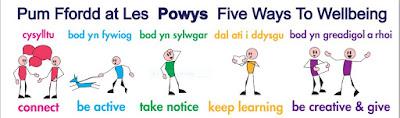
After joining the company in October 2020 as Health, Safety & Facilities Manager I realised that because our staff are split between 2 buildings, there was an opportunity to bring people together and connect on a personal level as well as through their working day.
It was all about trying to find an event to get everyone together and this seemed to meet the bill. People have different fitness levels so there was definitely that sense of connection that you get with people supporting each other.
 |
| Llyn Llydaw on the route up Snowdon |
Did you do much training prior to the Challenge?
As a runner myself I already take part in a lot of different events as do a few of my colleagues. However, the group was predominantly made up of people who went from doing nothing to doing some serious training for the Three Peaks.
Staff members trained at weekends and evenings, mainly by walking. We started initially in November 2020 when the Challenge was first announced. Training really picked up around March this year and when the weather started to improve, and the days were longer, we were able to get out even more.
It brought a lot of families together during the period of the Covid lockdown. People took their kids out walking and explored places that were local to them that they hadn’t seen before.
Tell us about the Challenge. How did it go?
It was hard work! It was really really good though! We set off at 6pm on the free coach (with driver!) provided by Tanat Valley Coaches and headed up to North Wales. Immediately as we started up Snowdon you could see groups forming of different people. Some were faster and headed off ahead with the slower groups at the back with a back marker.

The weather was quite bad - heavy rain and strong winds. Plus, the first ascent was through the night! But we made it! We finally finished at about 2.30am and were back on the coach for something to eat and drink before heading straight down to mountain number two - Cadair Idris.
 |
| Success on summiting Snowdon! |
On arrival at Cadair Idris the weather was even worse – the wind was more intense as we set off at 3am. Cadair Idris is not as high as Snowdon but a longer walk and definitely more challenging. It’s a lot more demanding on your body and we’d already done Snowdon. We picked up a few injuries along the way - people’s knees were aching by this point and some had blisters.
We arrived back at the bus after a successful climb and at 9am the driver took us straight down to South Wales to complete Pen Y Fan. Luckily the weather had eased off a lot by then. There was hardly any rain and it’s a bit easier – more of a steady walk. We took the route up from The Storey Arms and headed up over Corn Du to the summit. We talked a few strangers into sponsoring us up there and then took a different route back down to finish at 3.30pm. I had my dog Gilly, a springer spaniel, with me all the way – she runs everywhere with me!

What was the most challenging part of the Challenge?
Probably Cadair Idris was the hardest part – it was definitely the longest. On a good day it’s one of the best walks to do as the views are amazing. But the weather and the time of day made it the hardest of the lot. Everyone would probably agree – people were cursing me for dragging them out! But at the end everyone was really proud of themselves for completing the climb.
What was the most rewarding part of the Challenge?
For me it was getting off the bus at the end and seeing everyone really happy and positive about what they’d done. Even though there were complaints of sore bodies and tiredness there was no one without a smile on their face.
Now I can see people round the factory walking past and talking to each other where before they just walked past and paid no attention. The Challenge definitely had the effect I wanted it to in bringing people together. Even people who didn’t take part played their part by talking about it and getting involved in it.
 |
| They made it! The summit at Pen y Fan |
All three charities were chosen by the people taking part in the event whose lives have been affected in some way and helped by these charities.
Macmillan - a lot of people in the workplace have been affected by cancer – either themselves or their loved ones.
Designability – they make powered wheelchairs for physically disabled children. A small charity that played a big part in one of the team’s lives.
Ponthafren Association – I wanted to do something for a mental health charity. The whole challenge focused around mental health and wellbeing – bringing people together and lifting morale. I’m a mental health first aider – I was in the army and dealt with a different side of mental health in the forces. It’s a huge part of my life and something I’ve been conscious of through my whole working career from the age of 16. Ponthafren being local - and knowing the work they do – it couldn’t have been a better choice for me.
What was it like taking on the Challenge as a large team group?
Harder than I thought! When I first had the idea I thought it be easy – a walk in the hills for few people.
But there was a lot to think about - like making sure people had the right type of kit to cope with the different weather conditions. It was making sure people were aware of that, and checking they had the right food and nutrition.
I gave myself plenty of time to organise things which was good. And I couldn’t have asked for more support from Makefast. All the directors supported us all the way. They paid for all the food and the medals. They did so much.

How does taking part in a Challenge like this help reduce the stigma regarding mental health in our community?
When we started planning we asked people which charities they’d like to support. Many were not aware of Ponthafren. Once you explain it to them it leads on to more conversations about mental health.
Also people realised that doing something can help them feel proud of themselves. Suddenly they’re all talking positively and they know they can talk about mental health. I had my GoPro camera on for about 80% of the walk. Listening back there were lots of conversations that revolved around mental health. People realised that they can talk and that people will listen. It doesn’t need to be a trained counsellor you can talk to anyone about mental health. It’s helped a lot in that way.
What impact did taking on the Challenge have on your own and your colleagues’ mental health & wellbeing?
For myself it made me realise that I can do more than I thought through organising things, by bringing people together. I felt really good about myself. Doing something for so many people.
Everyone else has realised how much of a benefit getting outdoors helps. Lot of people have taken time out for themselves this year which has really benefitted them. Taking just half an hour a day to yourself can really help. You don’t have to shut yourself away from your family you can go for a walk. That’s all we really did was go for a walk.

Do it! Just don’t think about it. Just do it. Pick a challenge. Set a date. Go for it!
We’ll be doing something every year now with a focus on mental health.
I’ve had a few ideas about possible walks / challenges / camping trips / boat themed ideas to tie in with the company’s work. And we’ll be working on it for 2022’s challenge. So watch this space!
Big thanks to Jamie Love for telling us all about Makefast’s experience taking on the Welsh Three Peaks Challenge. You can still donate on the Makefast Sponsor Me page and see more photographs on the Makefast Facebook page.